Fredrick Abban
b. 1967,
Mankessim, Central Region, Ghana
b. 1967,
Mankessim, Central Region, Ghana
Bio
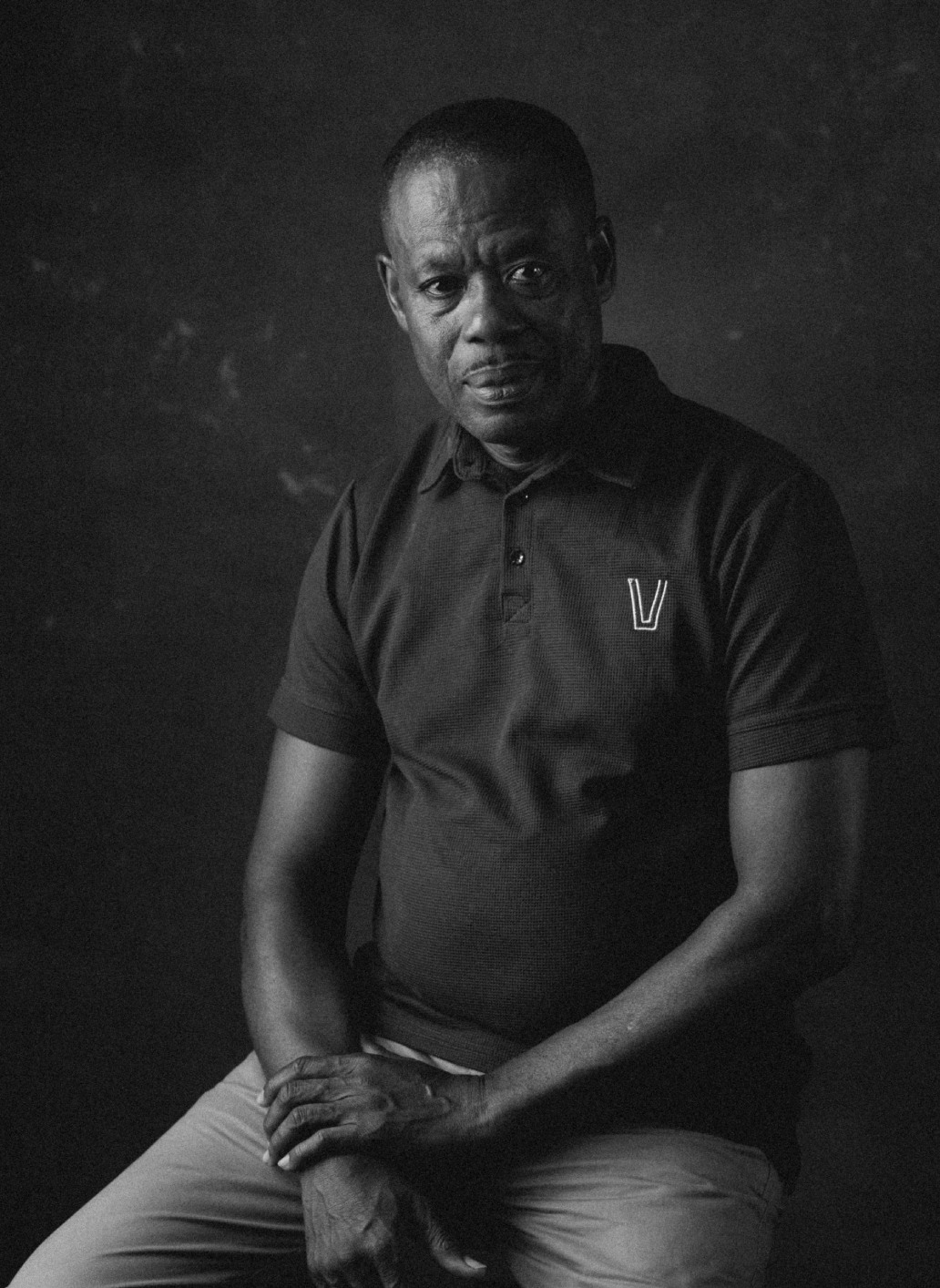
Fredrick Kofi Abban is among the most accomplished living potters working in Ghana’s southern ceramic tradition. Born into a family of potters in Mankessim, in the Central Region, he learned clay from his father in the 1970s, when pottery in the region was at once a livelihood, a craft, and a shared local language. Over more than three decades of practice, he has become a defining figure in Ghana’s contemporary ceramics, holding the techniques of the Mankessim school while training the generation now working under his hand.
He has worked from his family compound for over twenty-five years, now alongside his brother, and the workshop remains a place of family practice and shared learning. The compound’s kiln is a brick-domed structure of unusual scale, large enough to hold several dozen pieces, or several dozen people, in a single firing.
Practice and Process:
Abban works almost entirely with clays he has known for decades, drawn from the deposits around Mankessim and Winneba in the Central Region, the kaolin-rich soils of Akwatia, and the terracotta clays of Assin Foso. The range gives him a tonal vocabulary that few of his contemporaries possess.
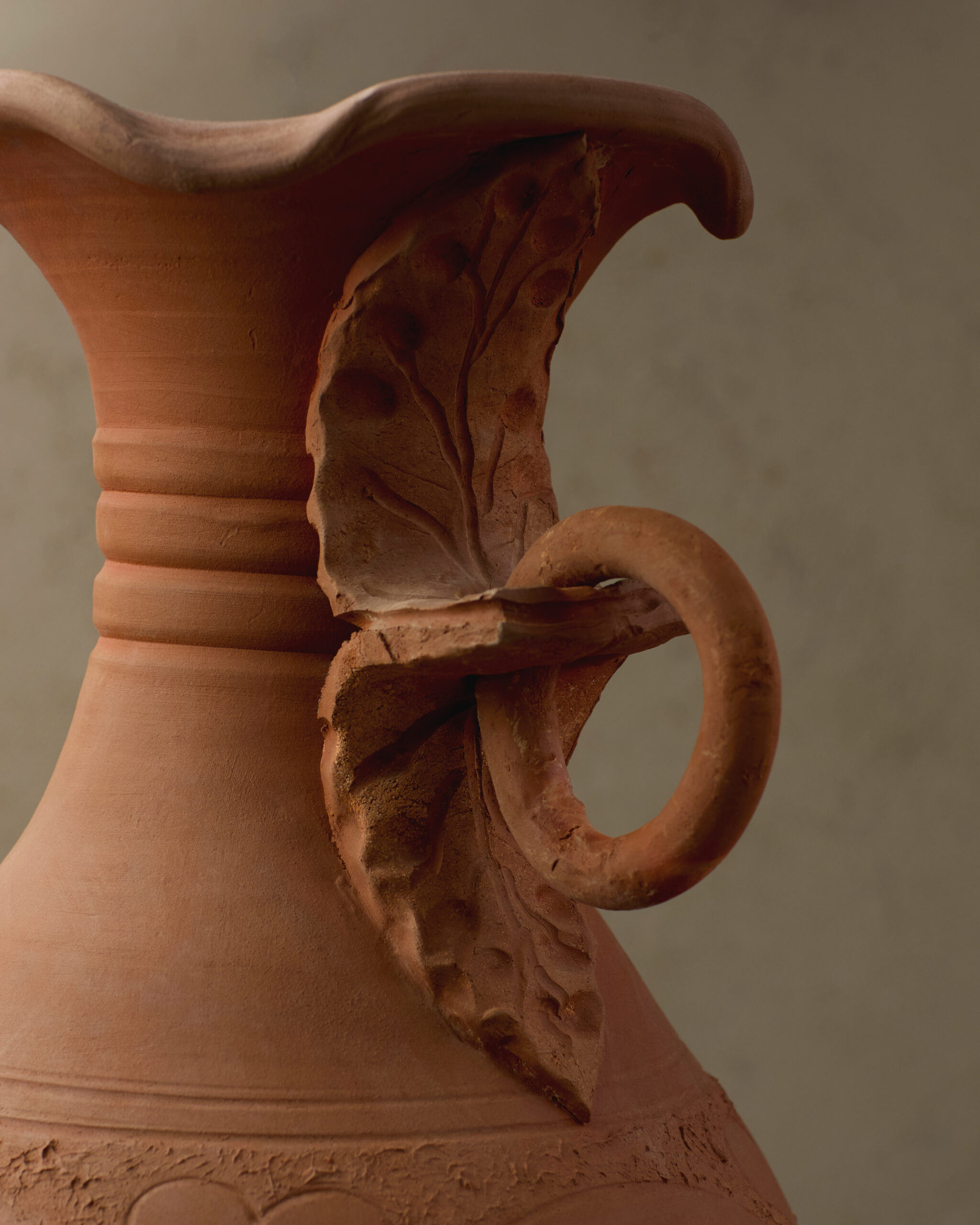
The throwing itself is entirely manual. He works above a traditional wooden wheel turned by an apprentice, the two-person method that has carried Mankessim pottery for generations. The form takes shape through a rhythm shared between the two makers, neither of whom can produce the piece alone.
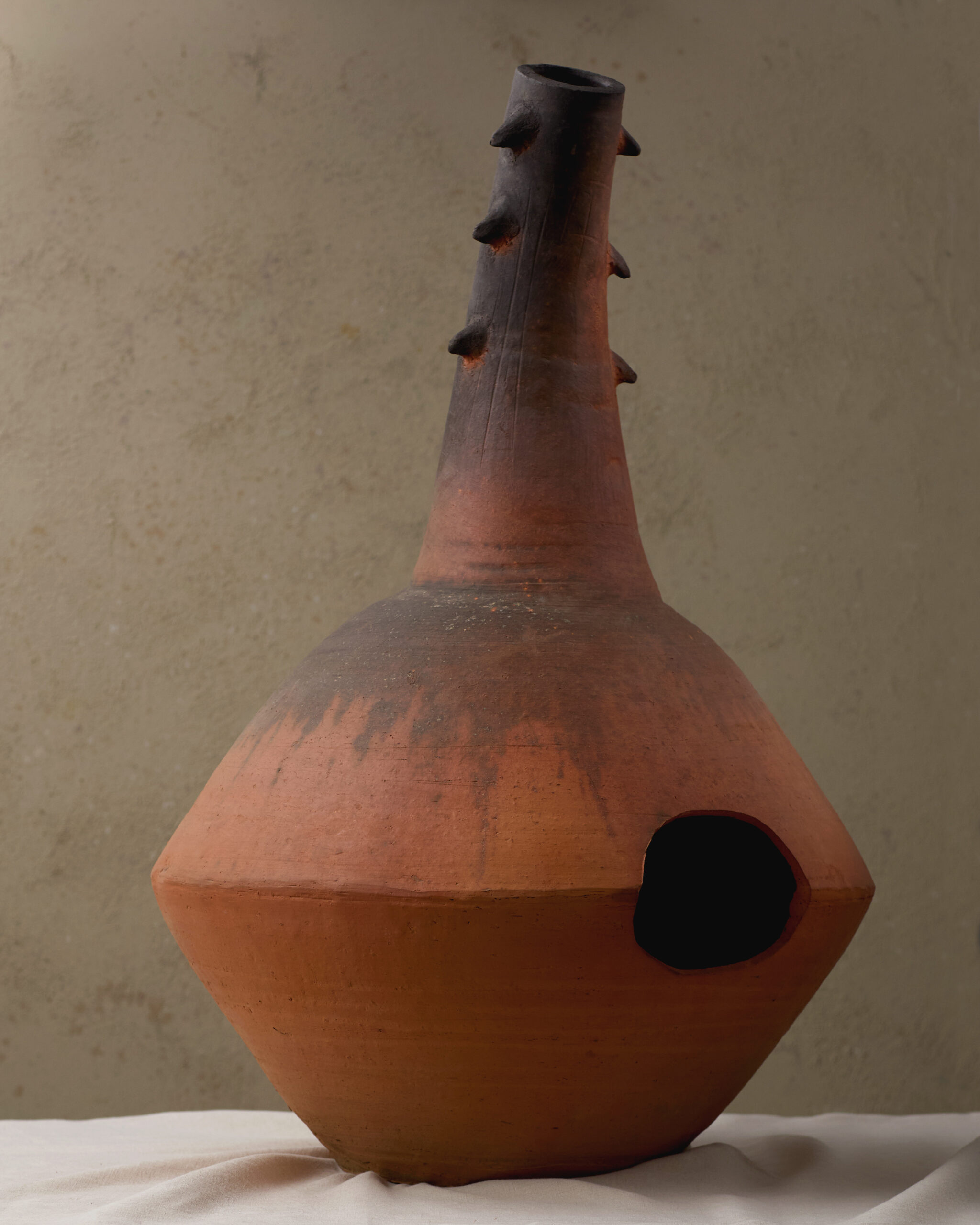
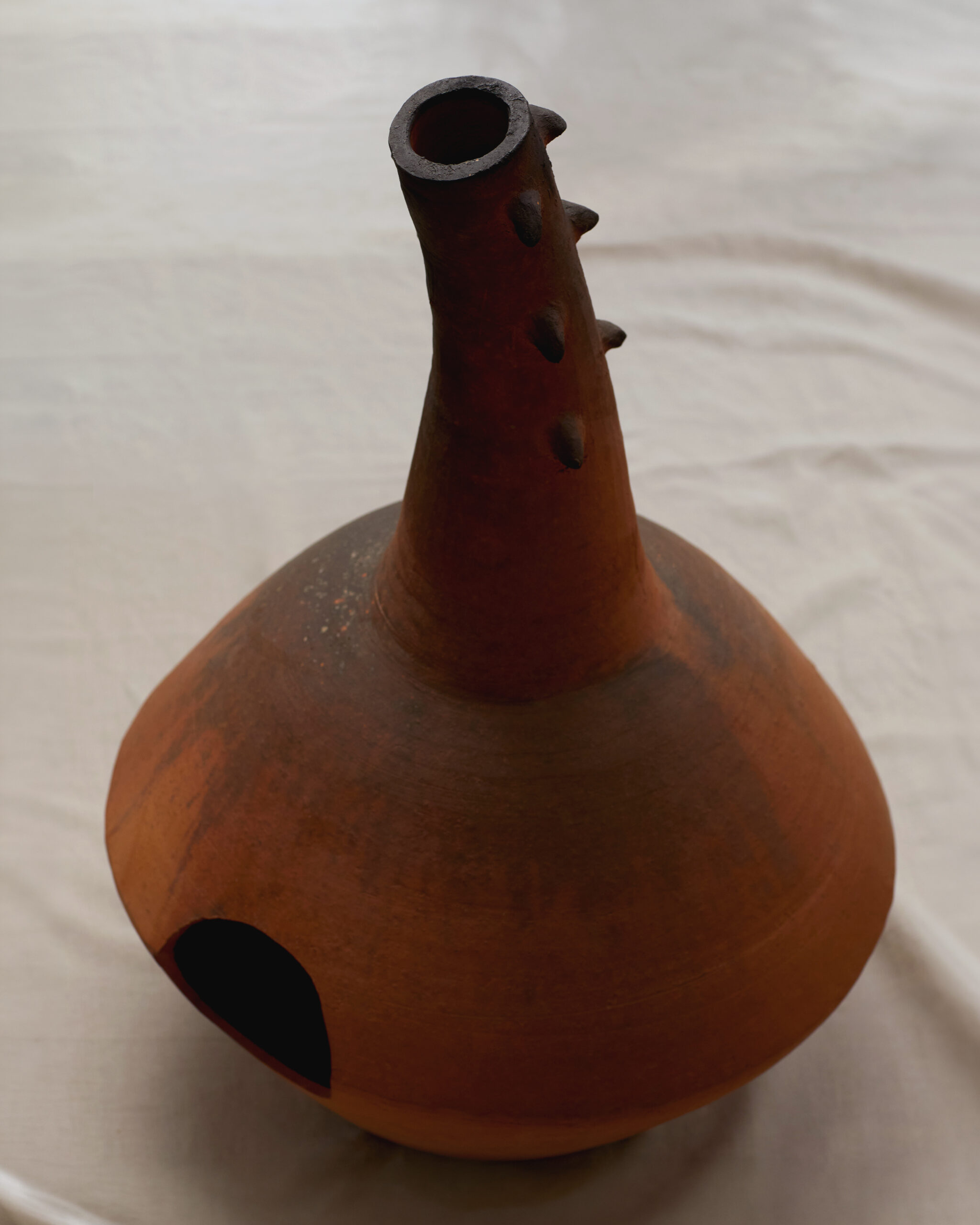
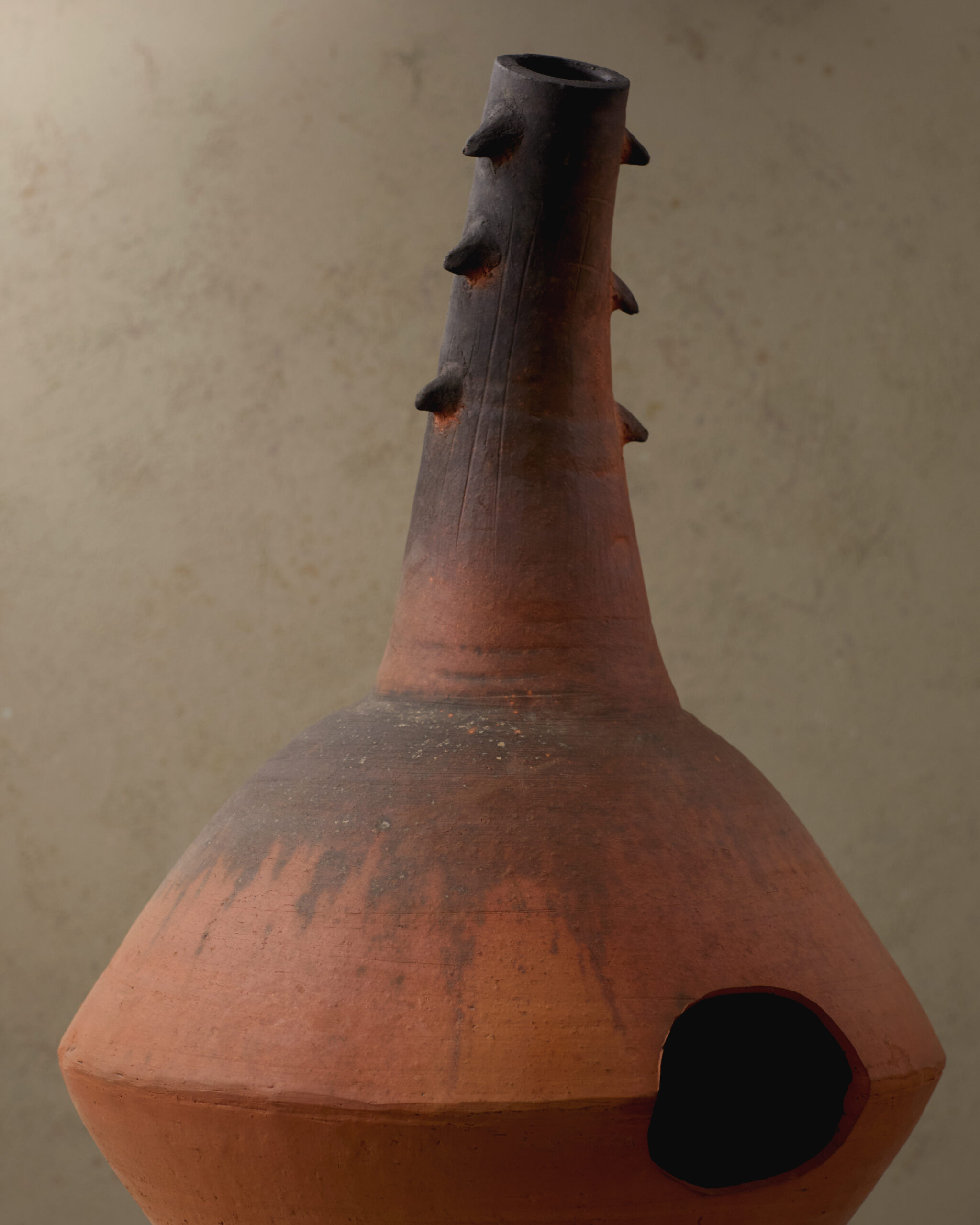
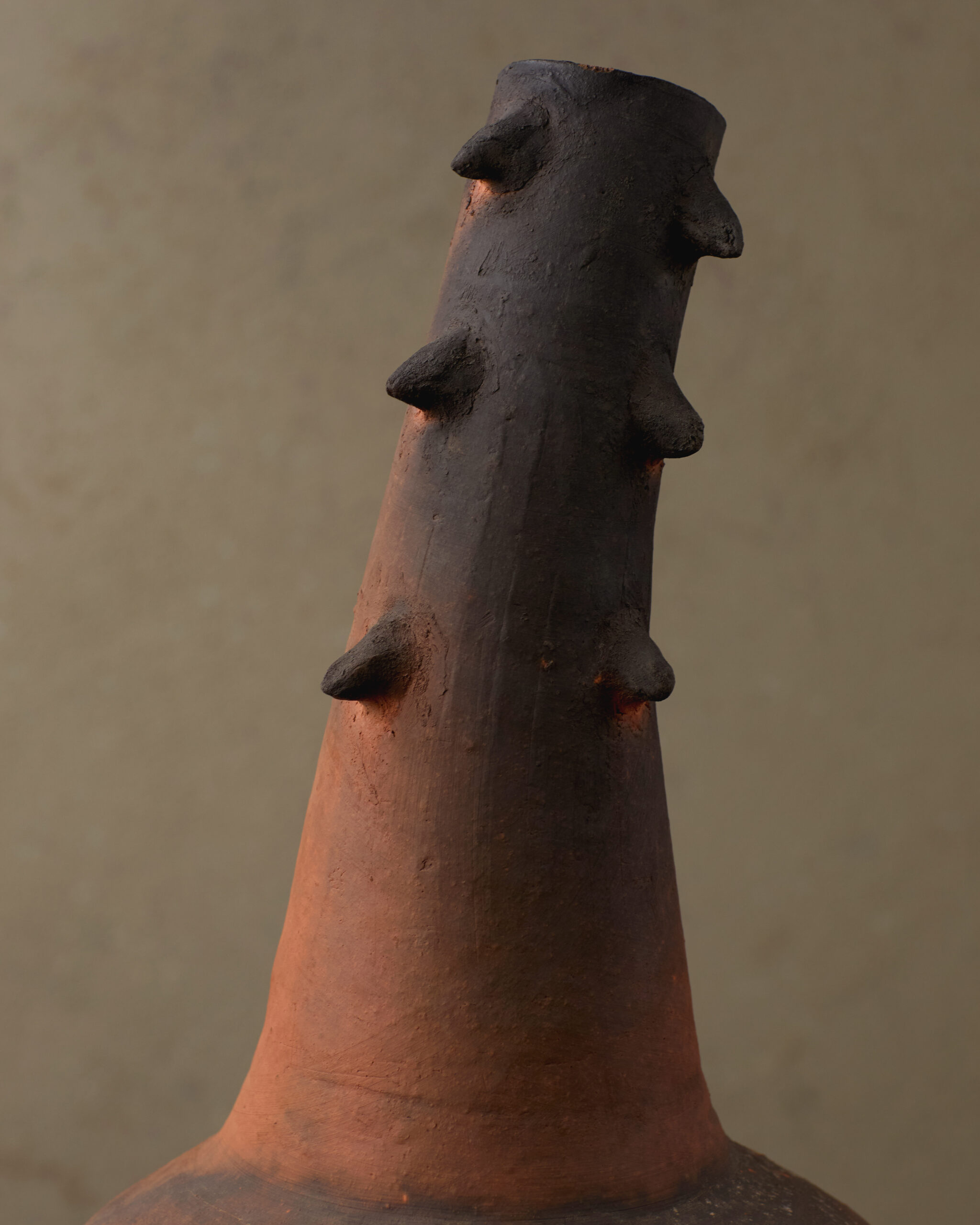
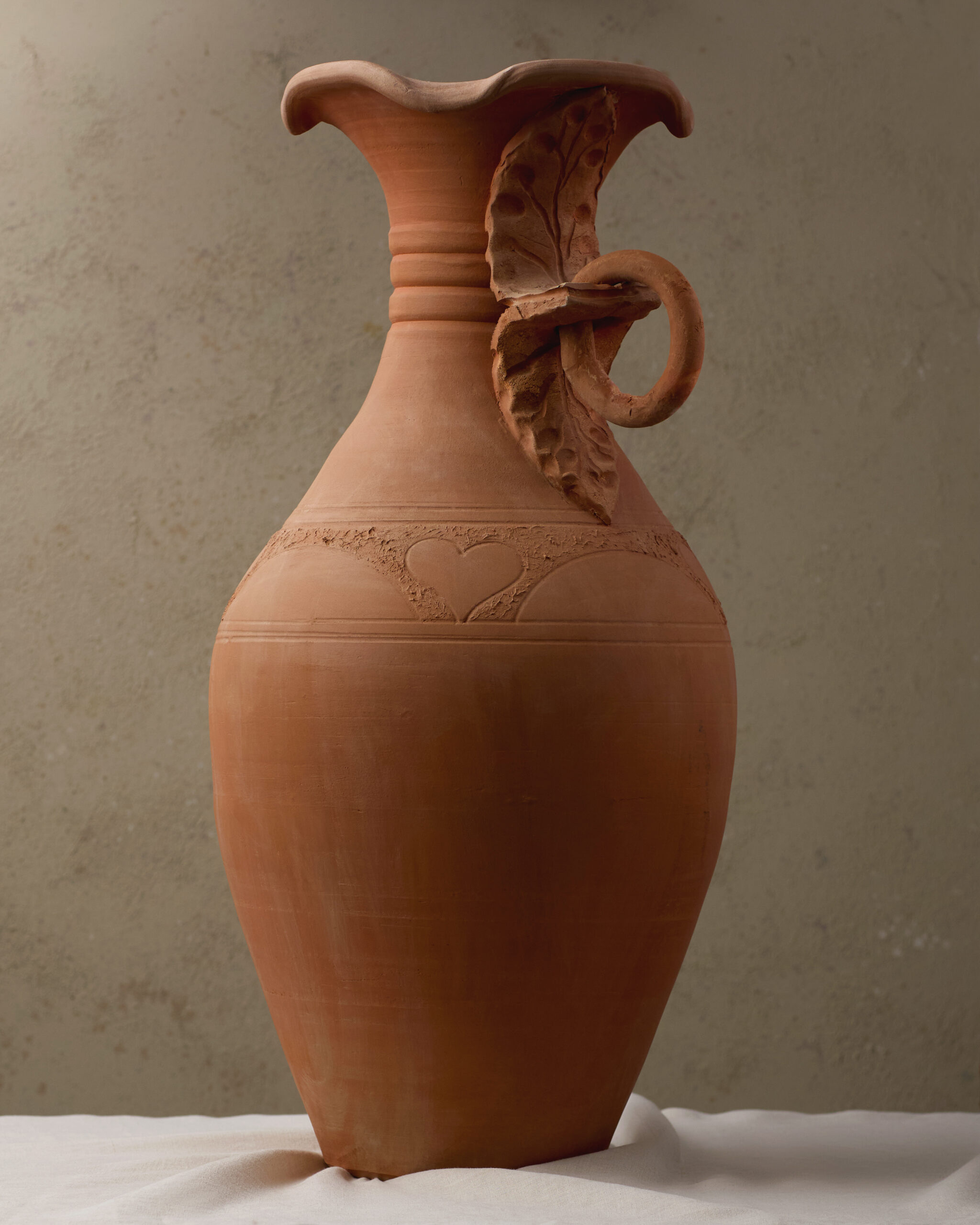
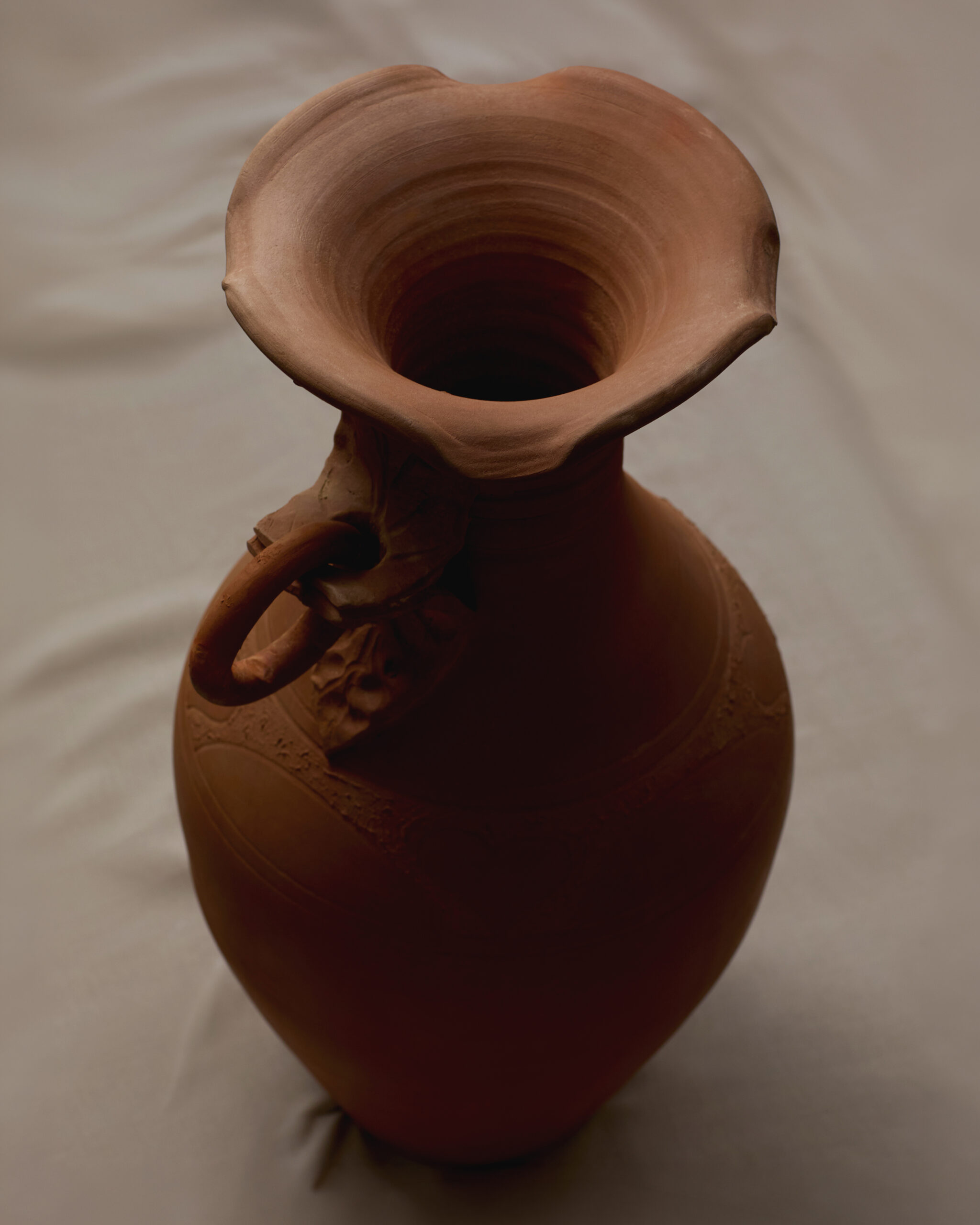
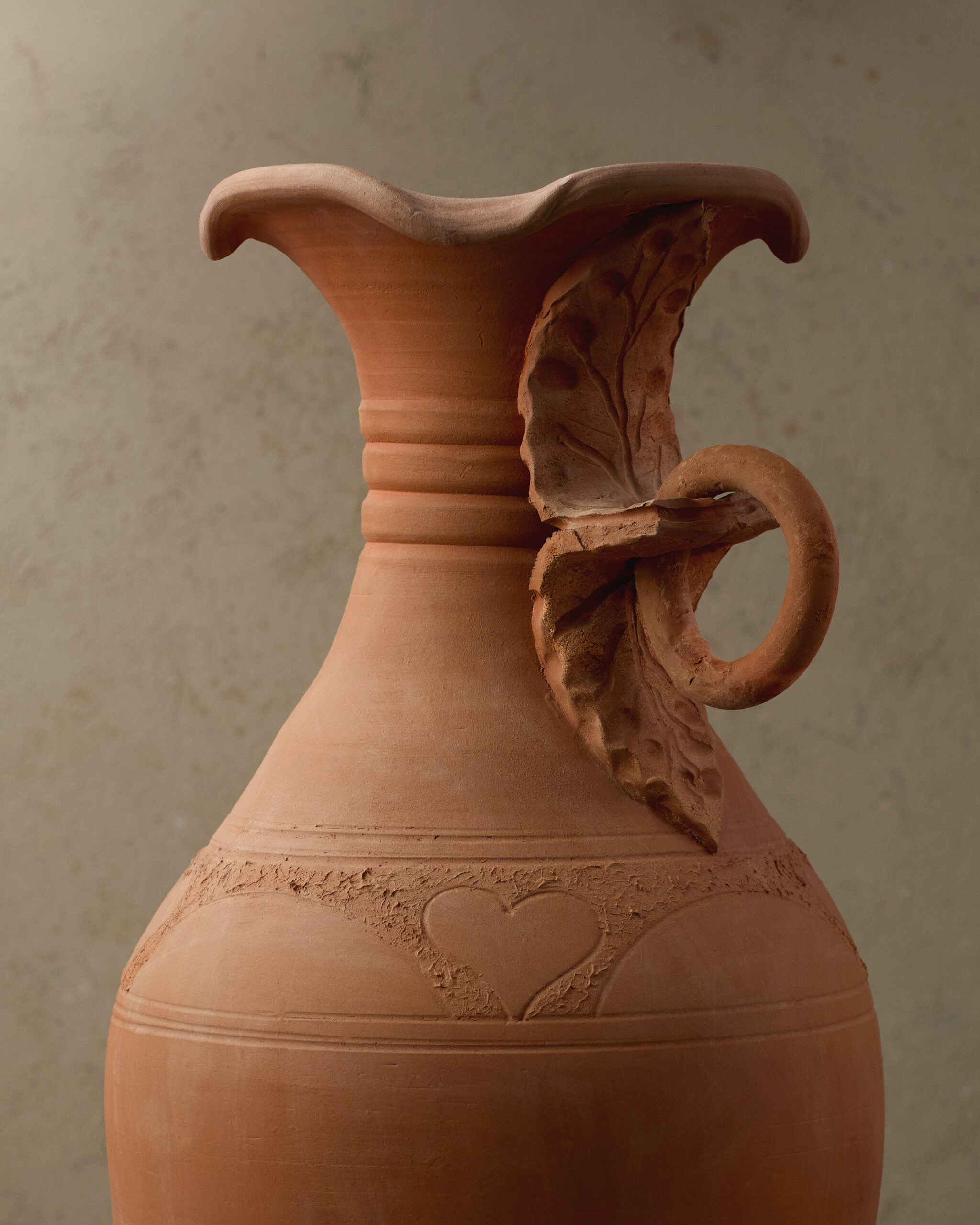
His large vessels are unglazed and wood-fired, with the kiln itself functioning as part of the composition. Abban places each piece deliberately within the chamber, controlling how flame, ash and smoke meet the surface. Pots in the hottest zones develop deep flame markings and dark carbon deposits ; pieces set further from the intense heat hold cleaner terracotta tones. Slow firings carry the rest. No two pieces emerge the same, and none emerge accidentally.


.svg)
.svg)

