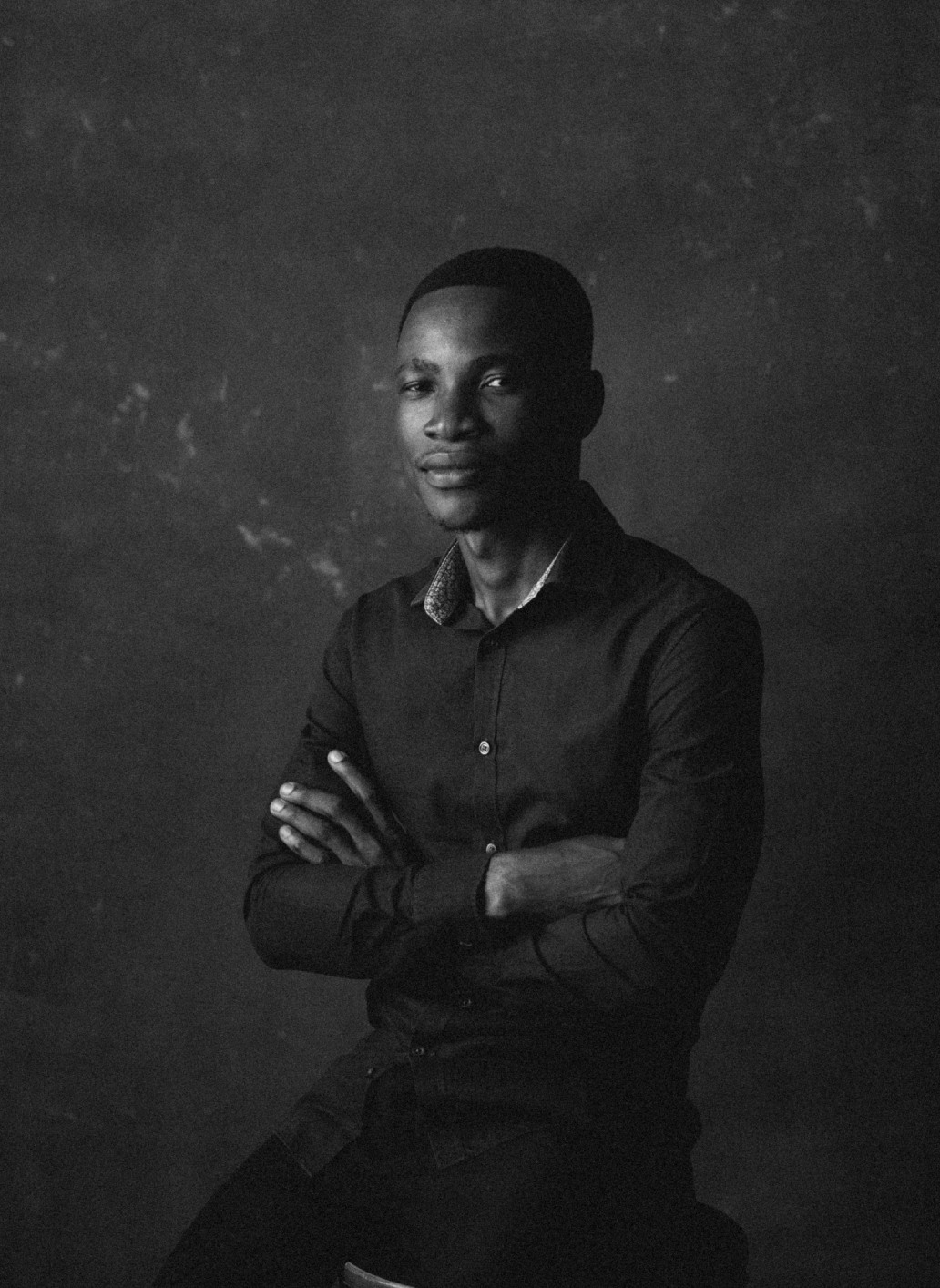
David Obeng Adane is a Ghanaian ceramic artist based in Abensu-Pokuase, on the western edge of Accra. He trained at the Kwame Nkrumah University of Science and Technology in Kumasi, where he received his BA in Ceramics in 2014, and at the University of Education, Winneba, where he completed a Postgraduate Diploma in Education in 2021. His work sits within the post-2010 generation of KNUST-trained Ghanaian ceramicists who have moved the country’s studio practice toward sculptural and conceptual ground while keeping its visual roots in Akan symbolism.
In 2024 Adane was awarded the 4th Annual Kaabo Clay Award for Black Ceramicists by the Kaabo Clay Collective, and undertook a residency at ArtO Studio in Lagos under the Visions In Clay Collective, working alongside the Nigerian sculptor and potter Ato Arinze. His work was shown later that year at Quintessence Parkview Gallery in Lagos as part of the group exhibition Ori: A Contemporary Interpretation. He is a member of both the Kaabo Clay Collective and the Vision in Clay Collective, and has held an institutional position at the Kokrobitey Institute on Ghana’s coast.
Practice and Process:
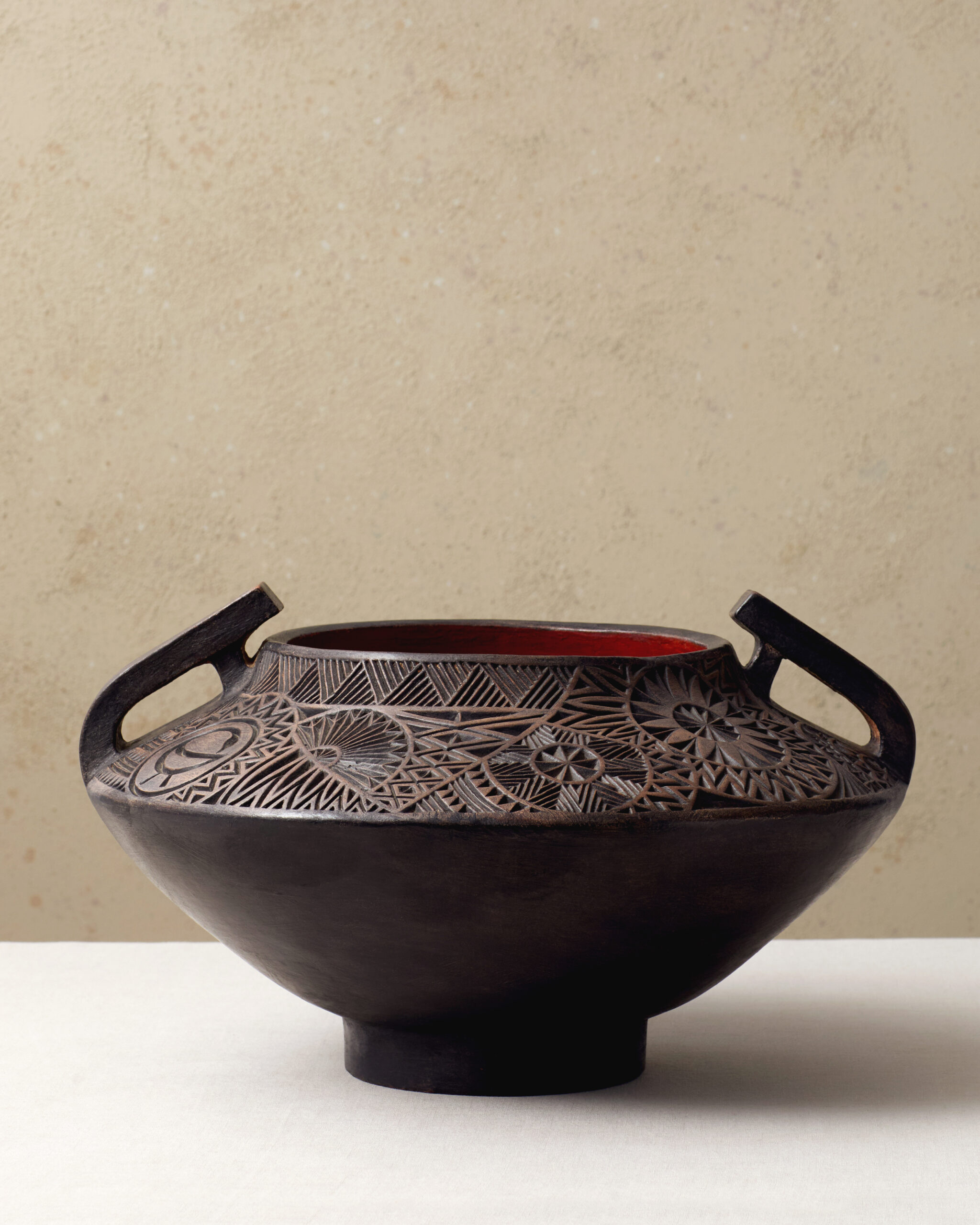
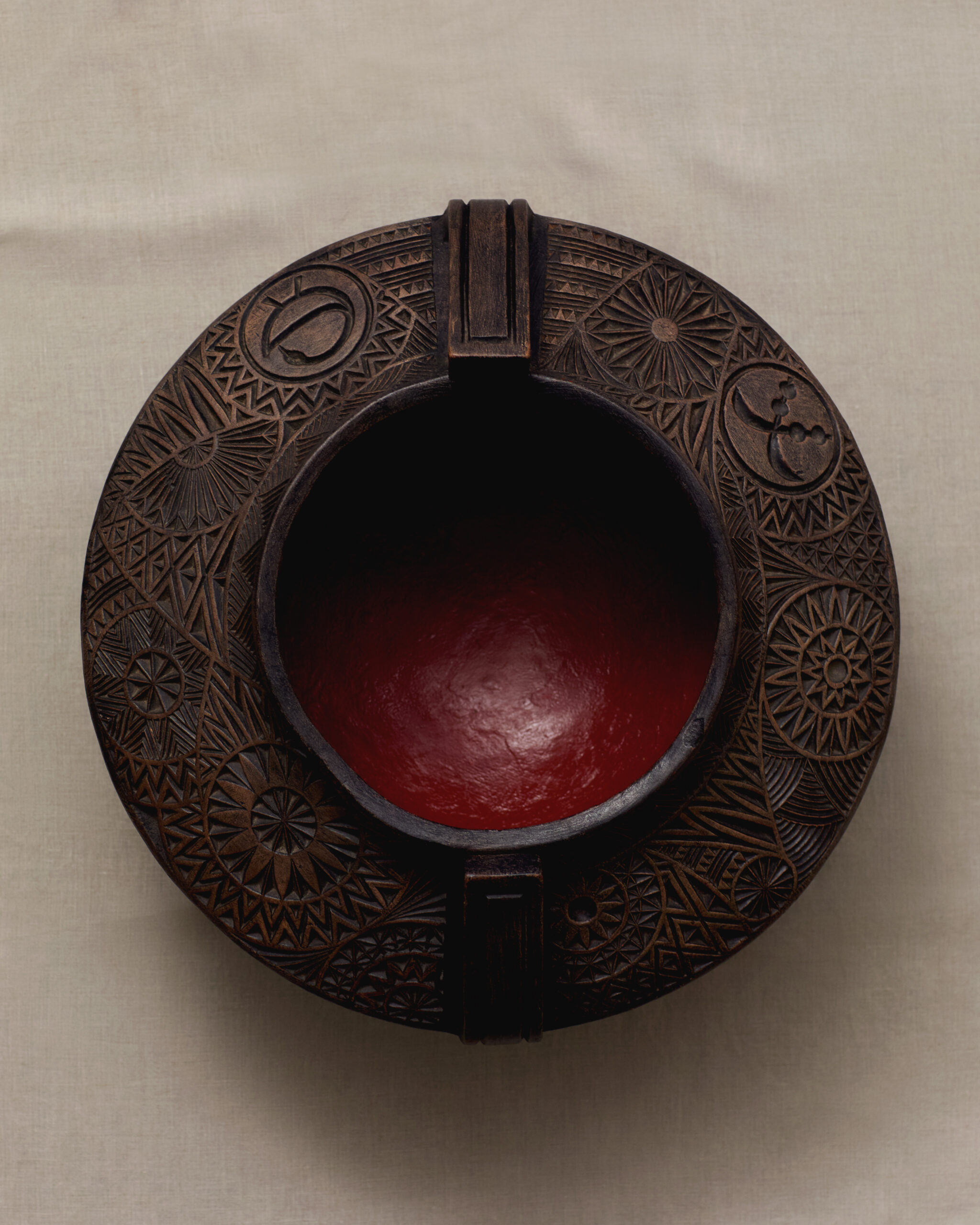
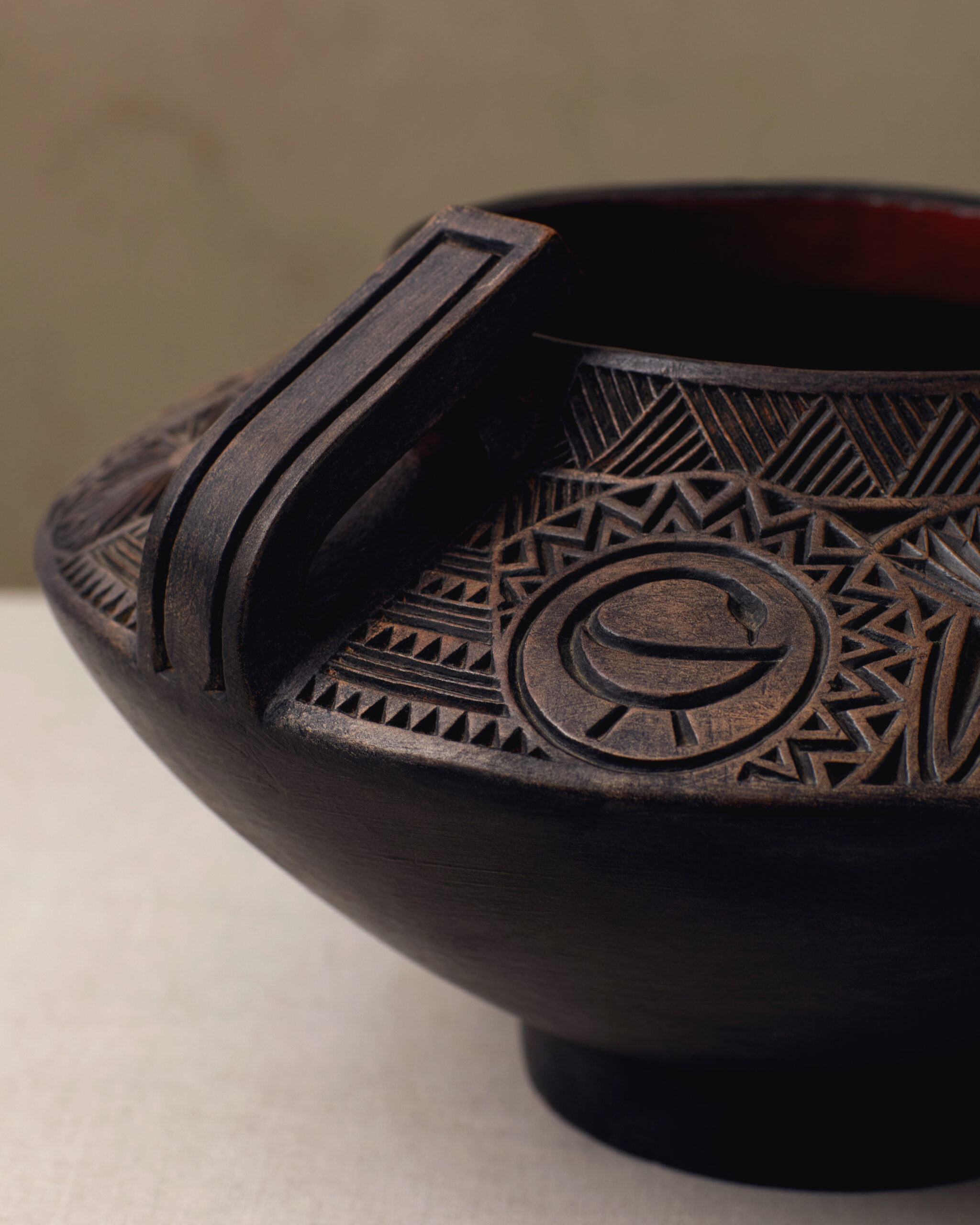
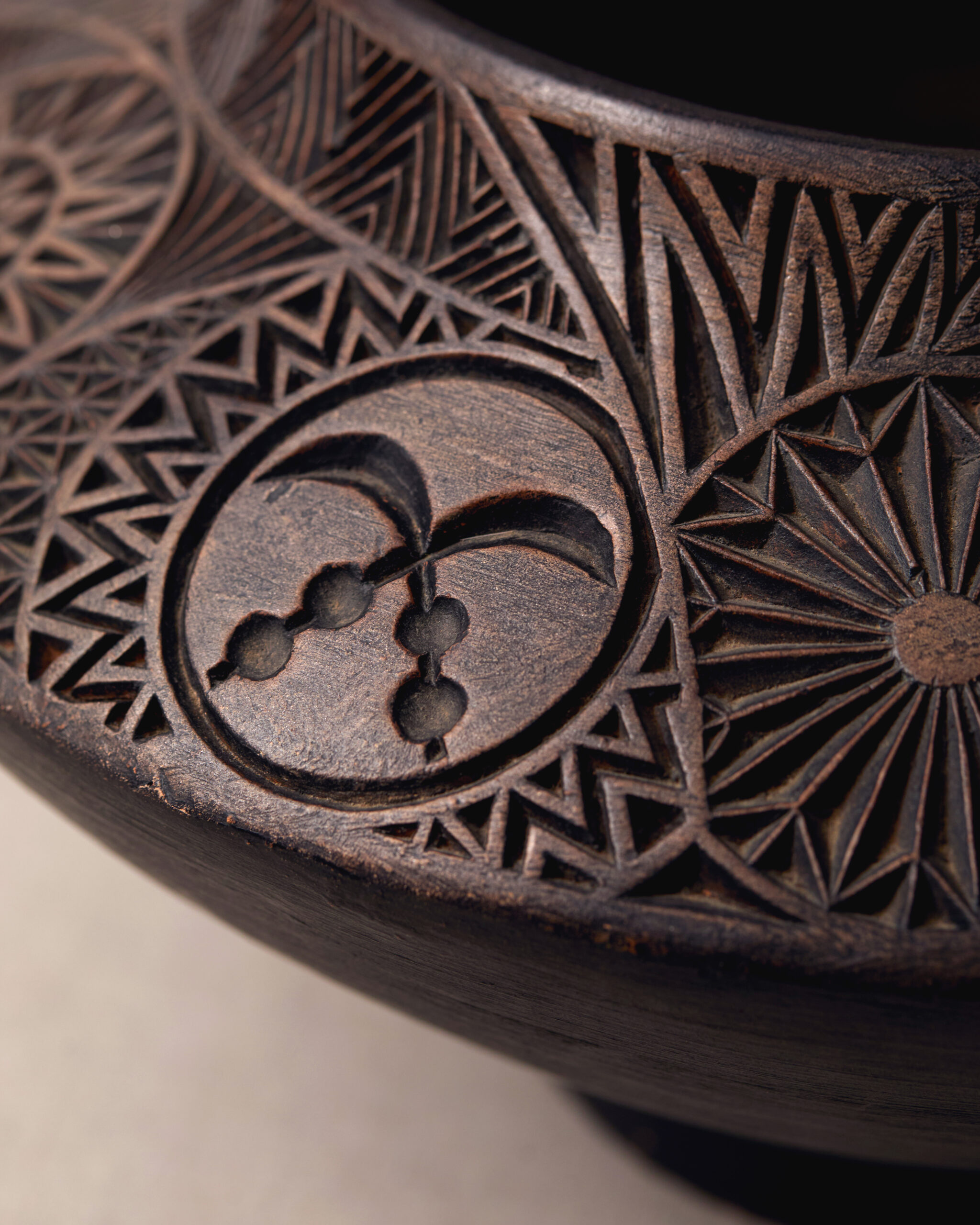
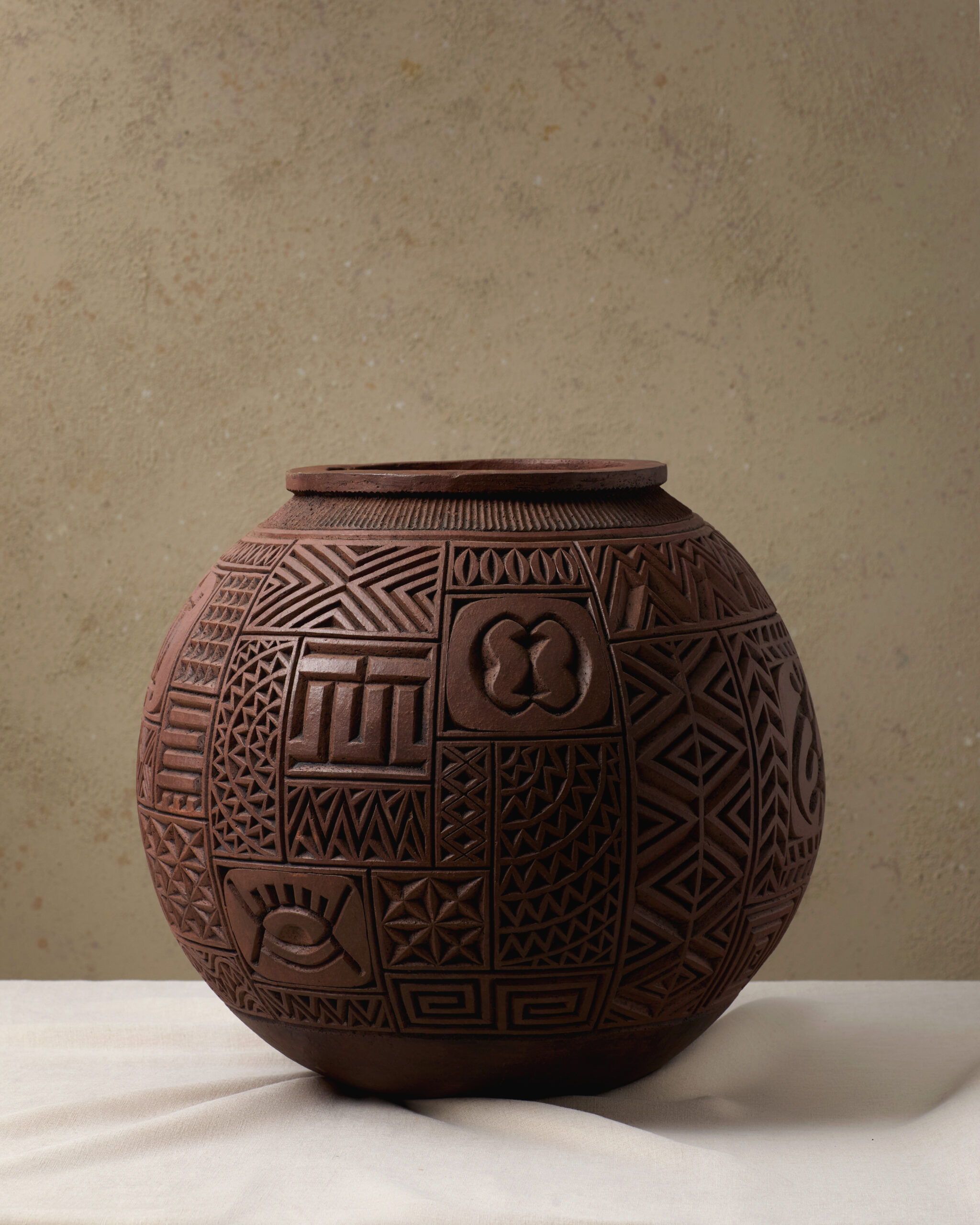
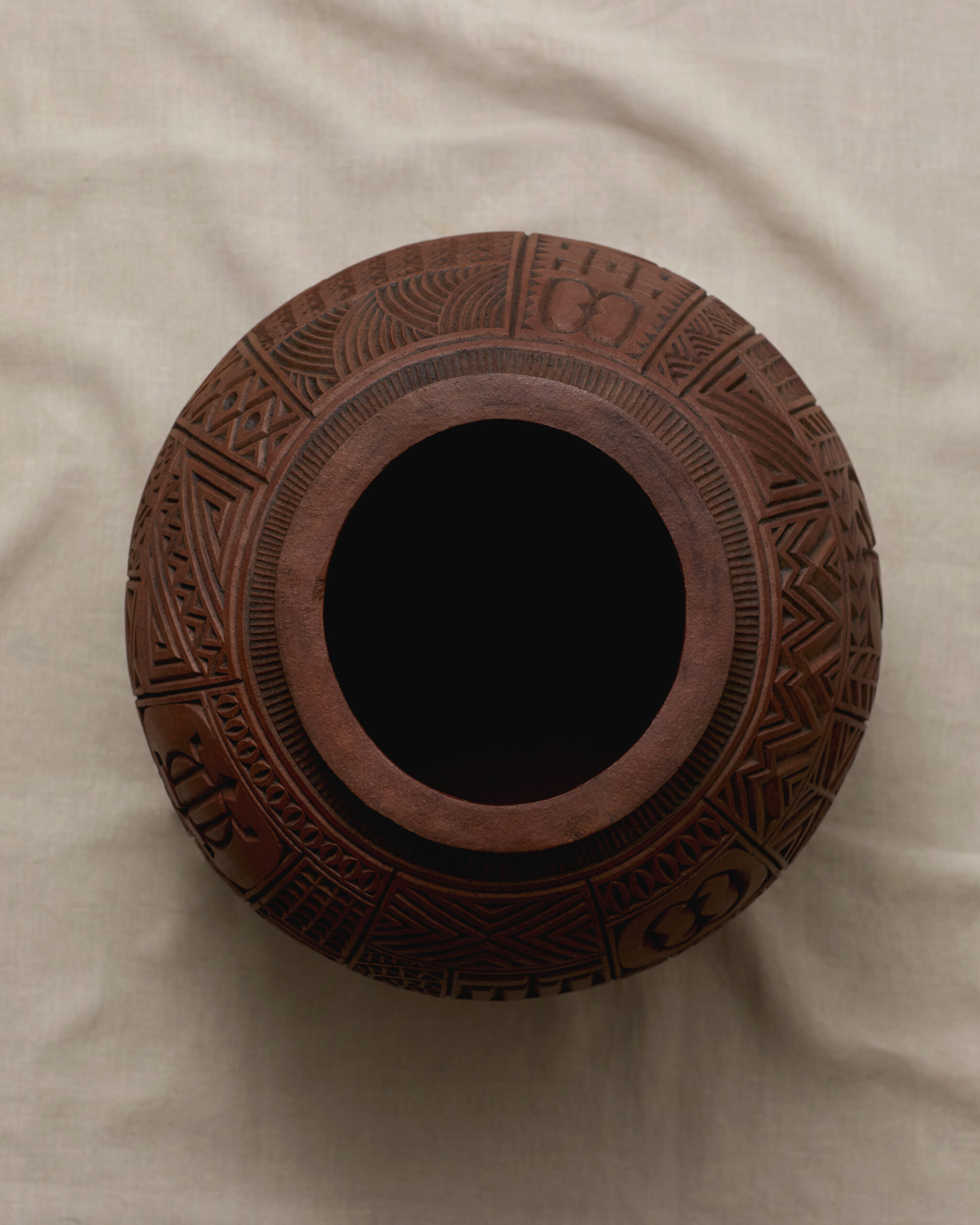
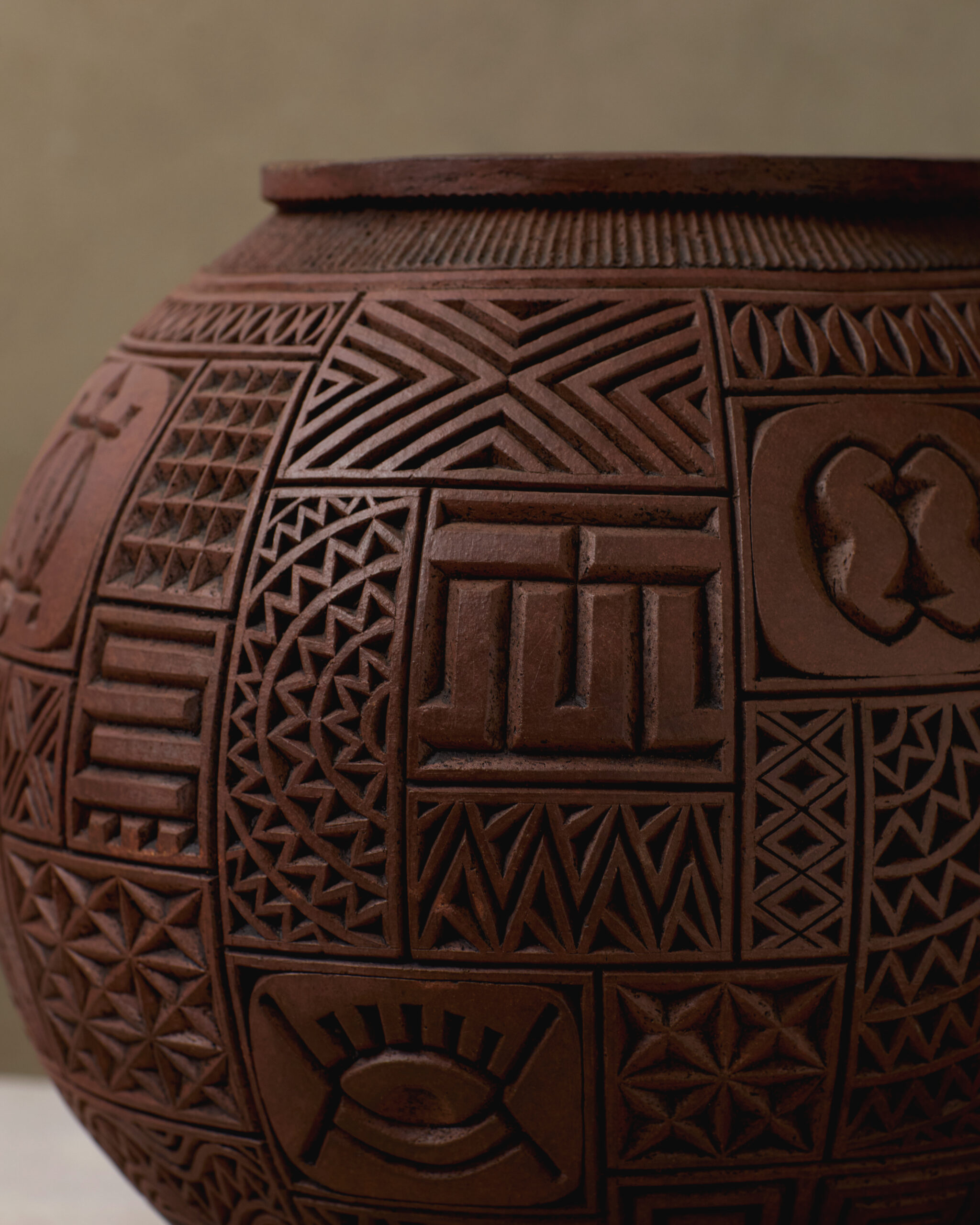
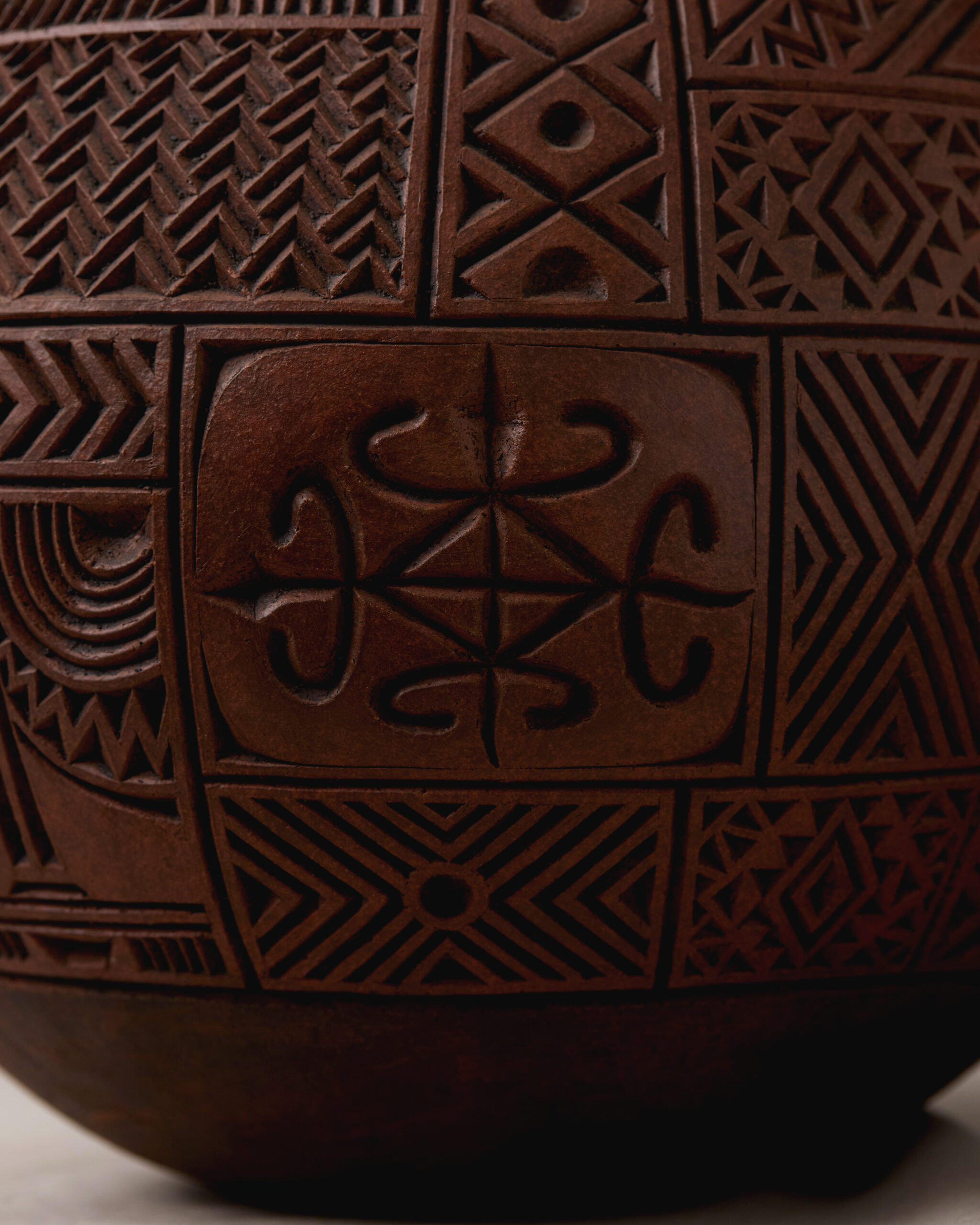
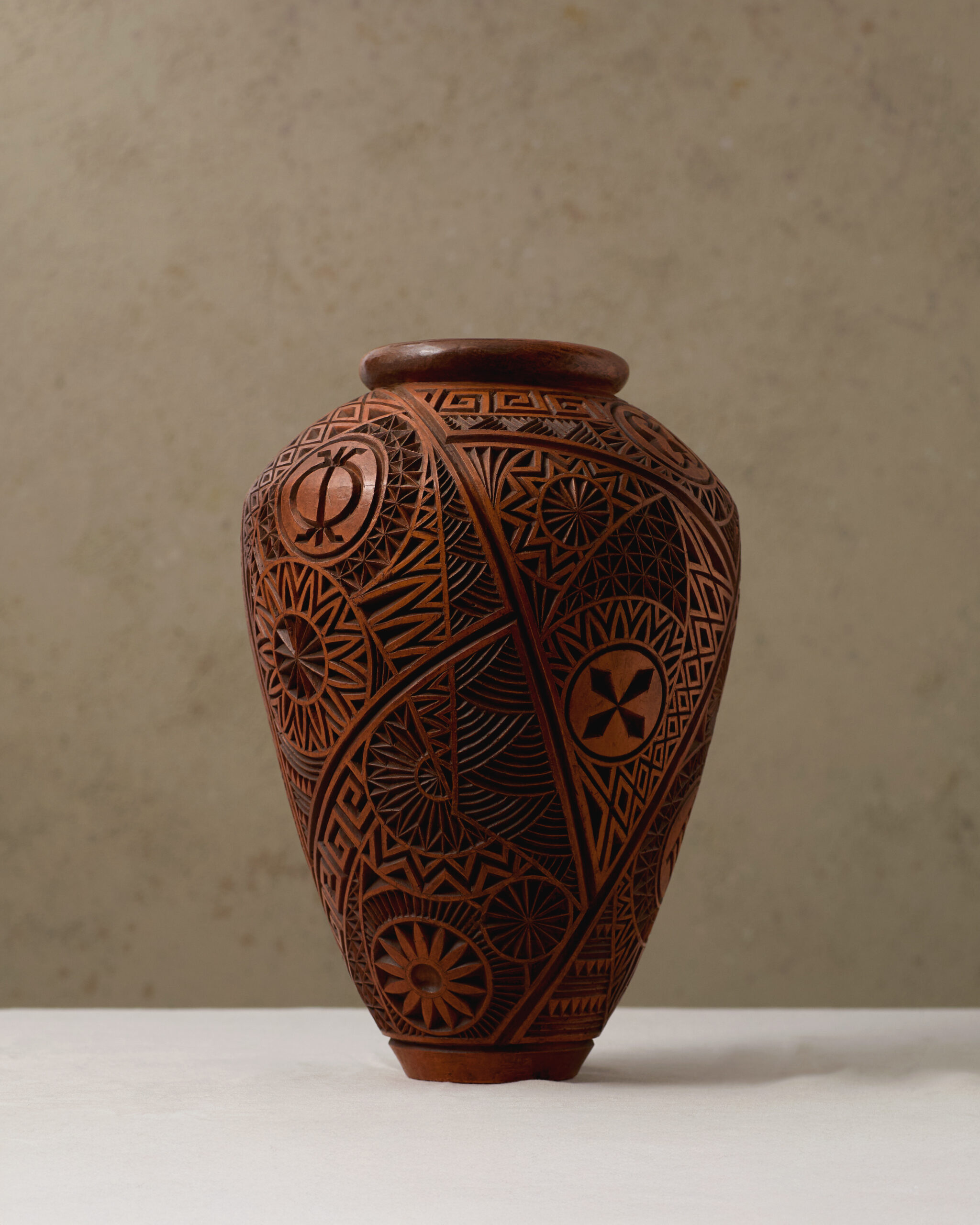
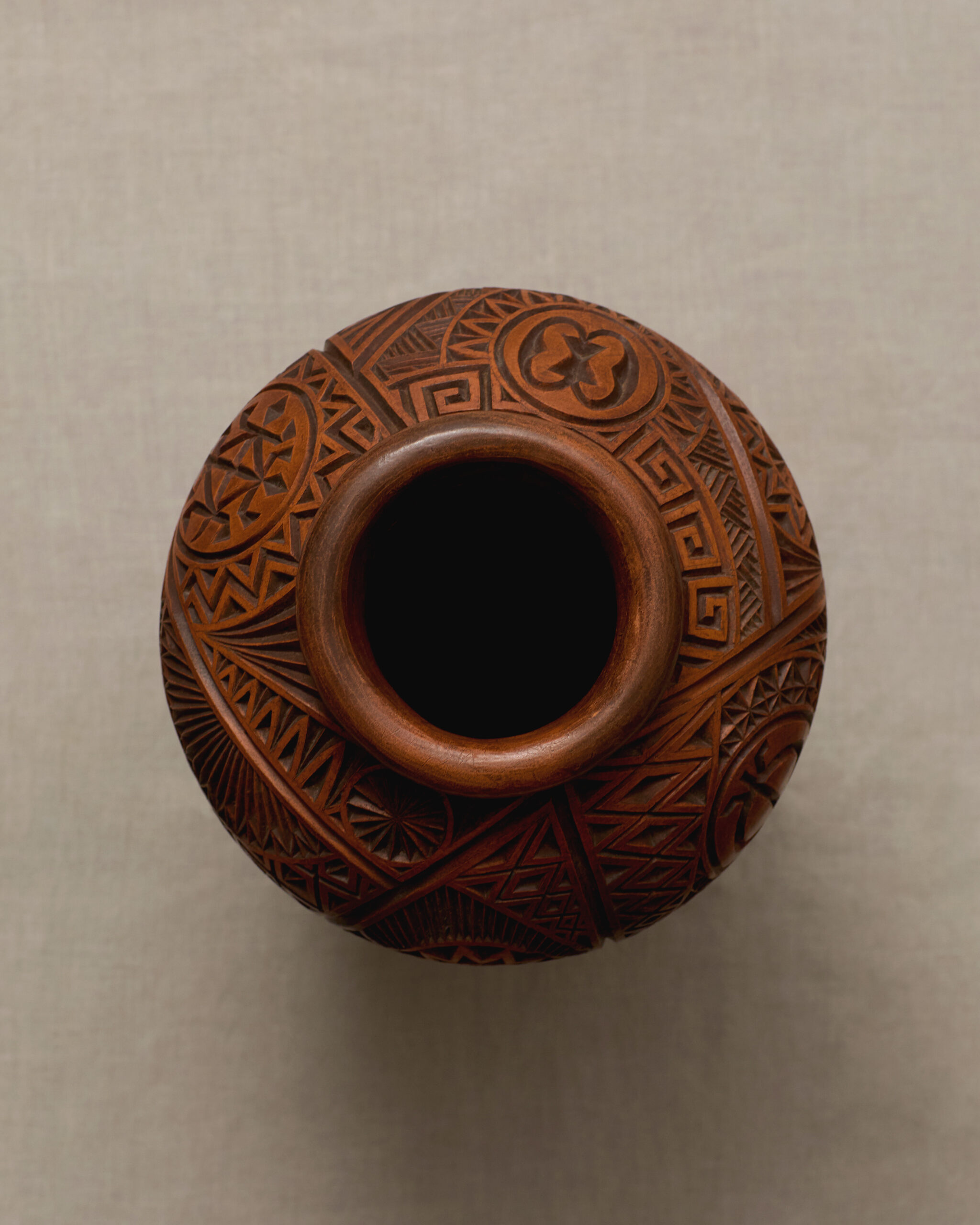
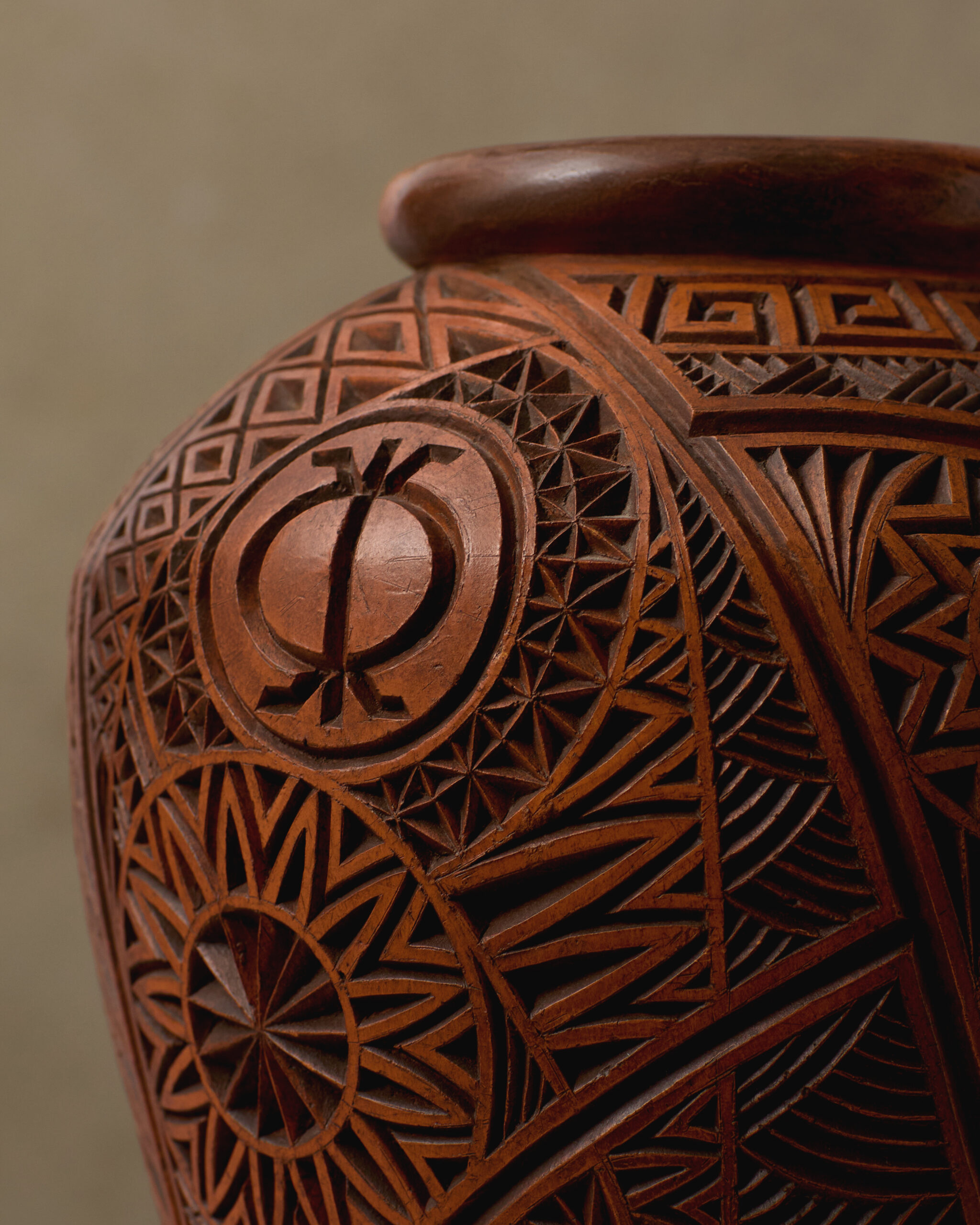
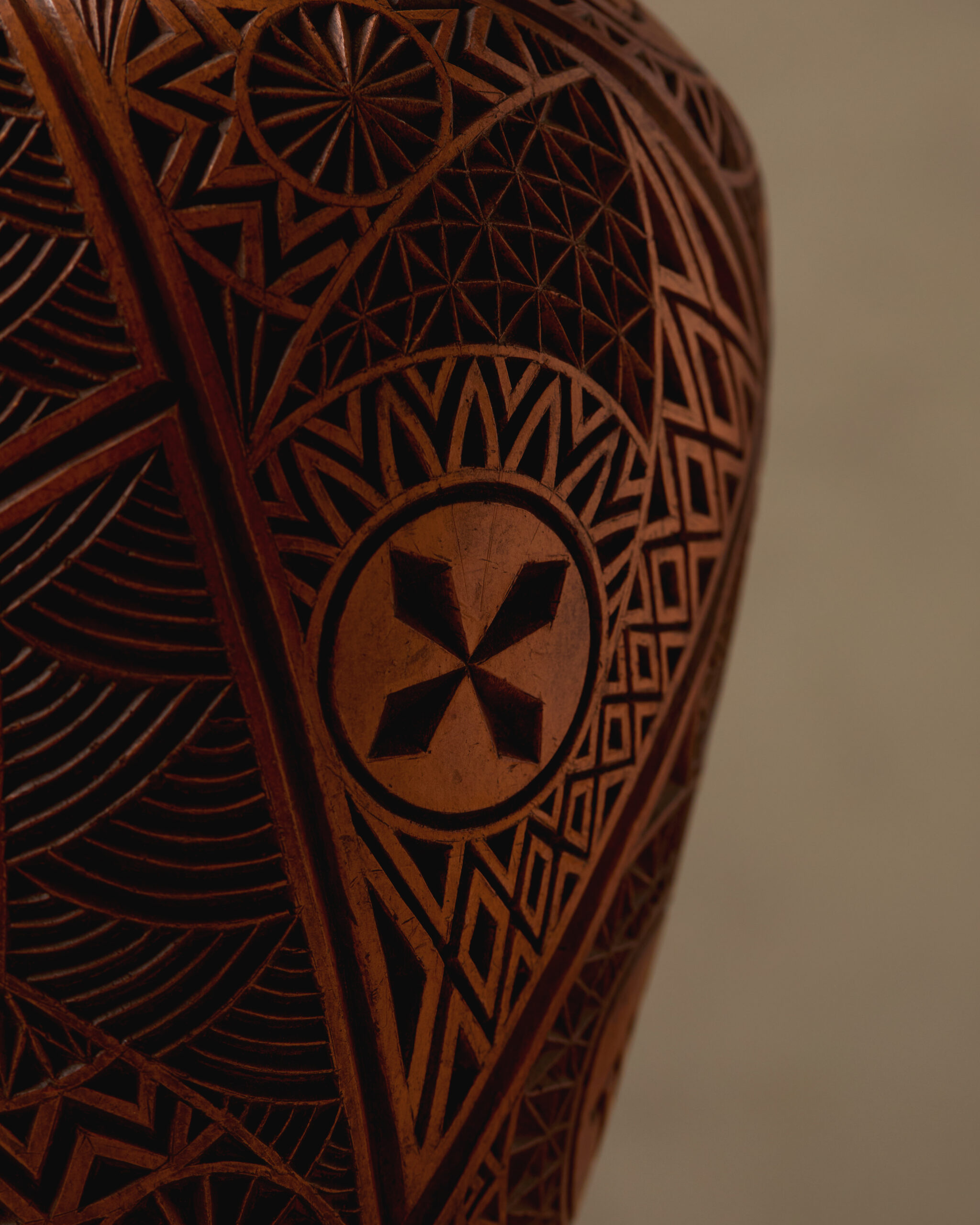
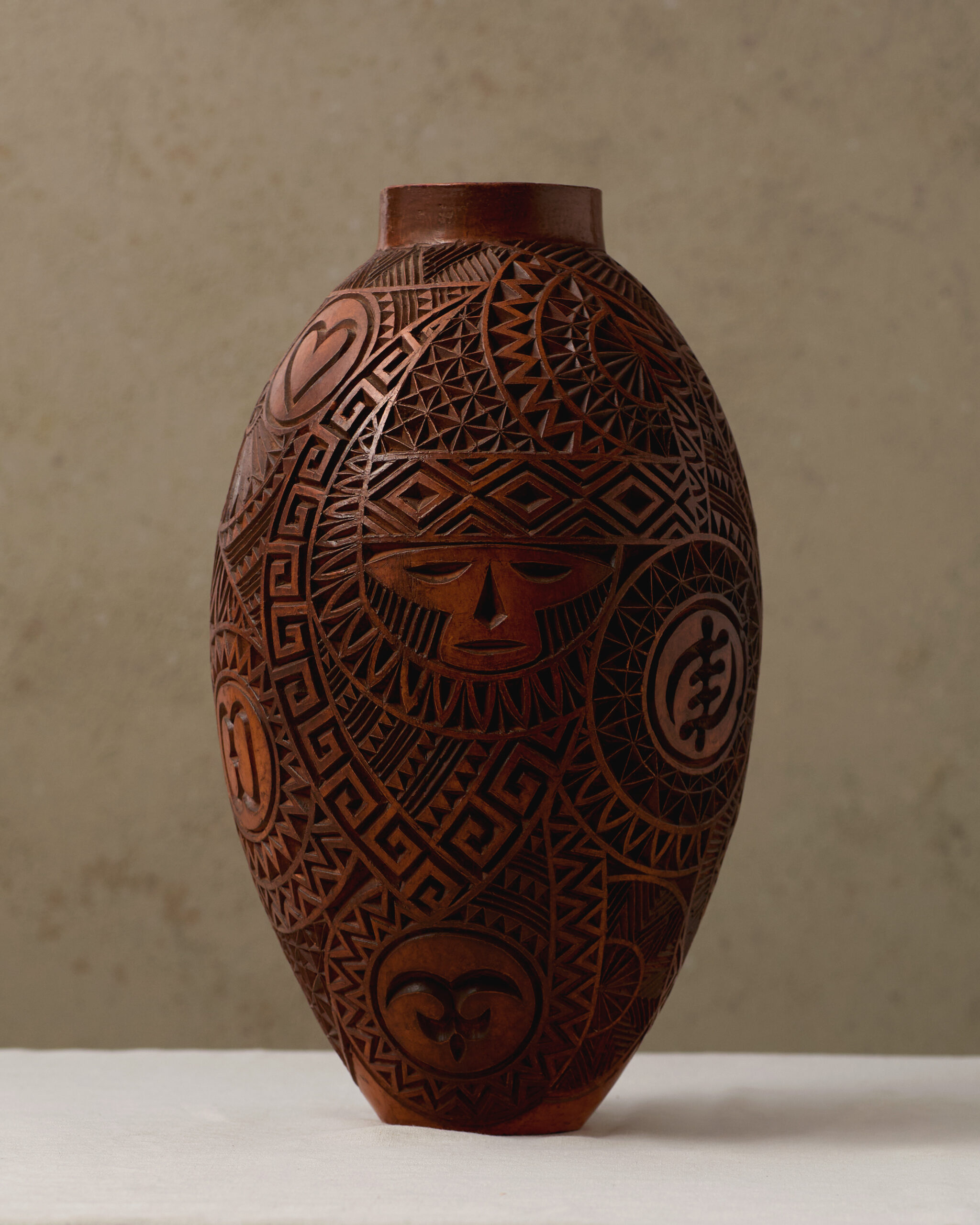
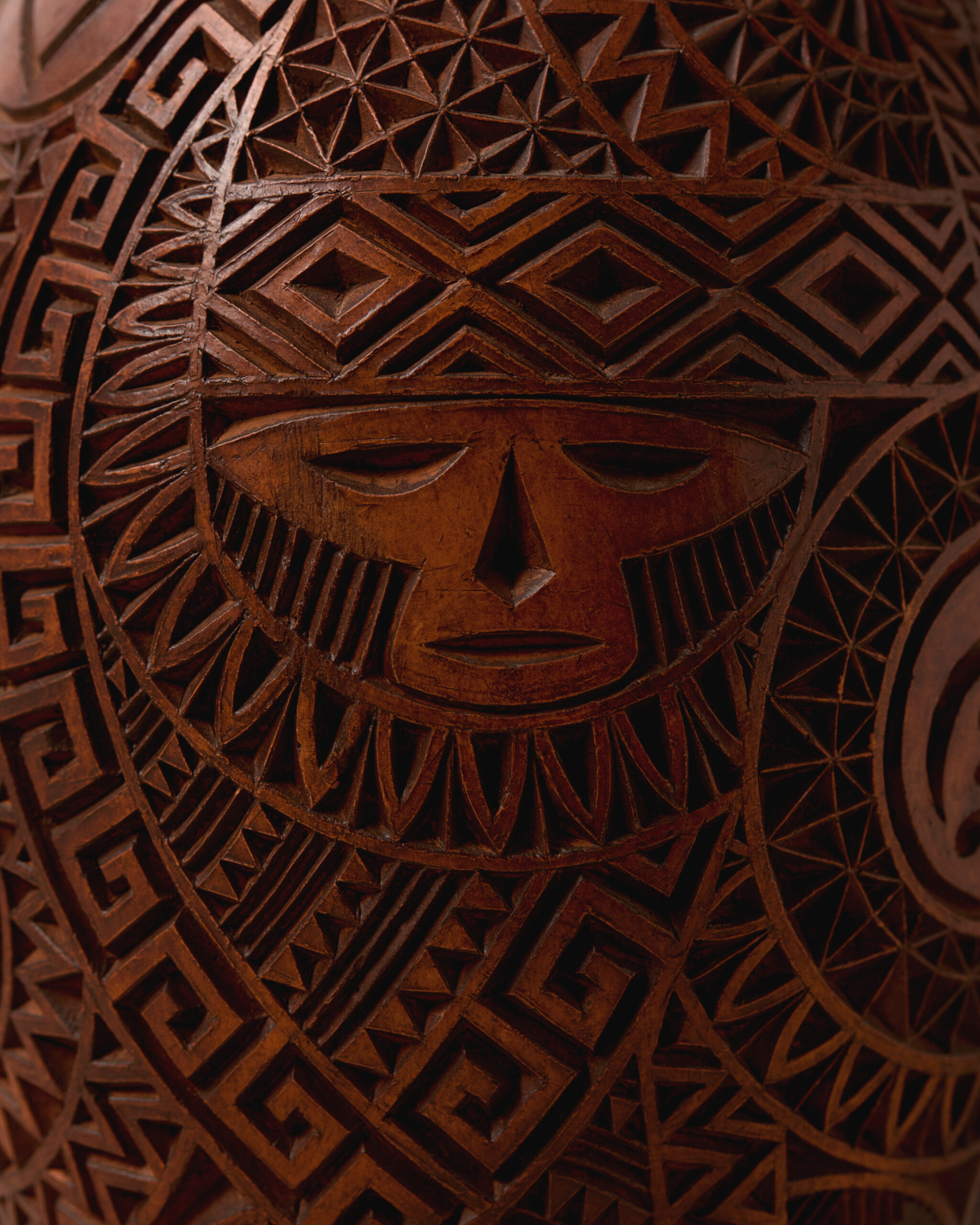
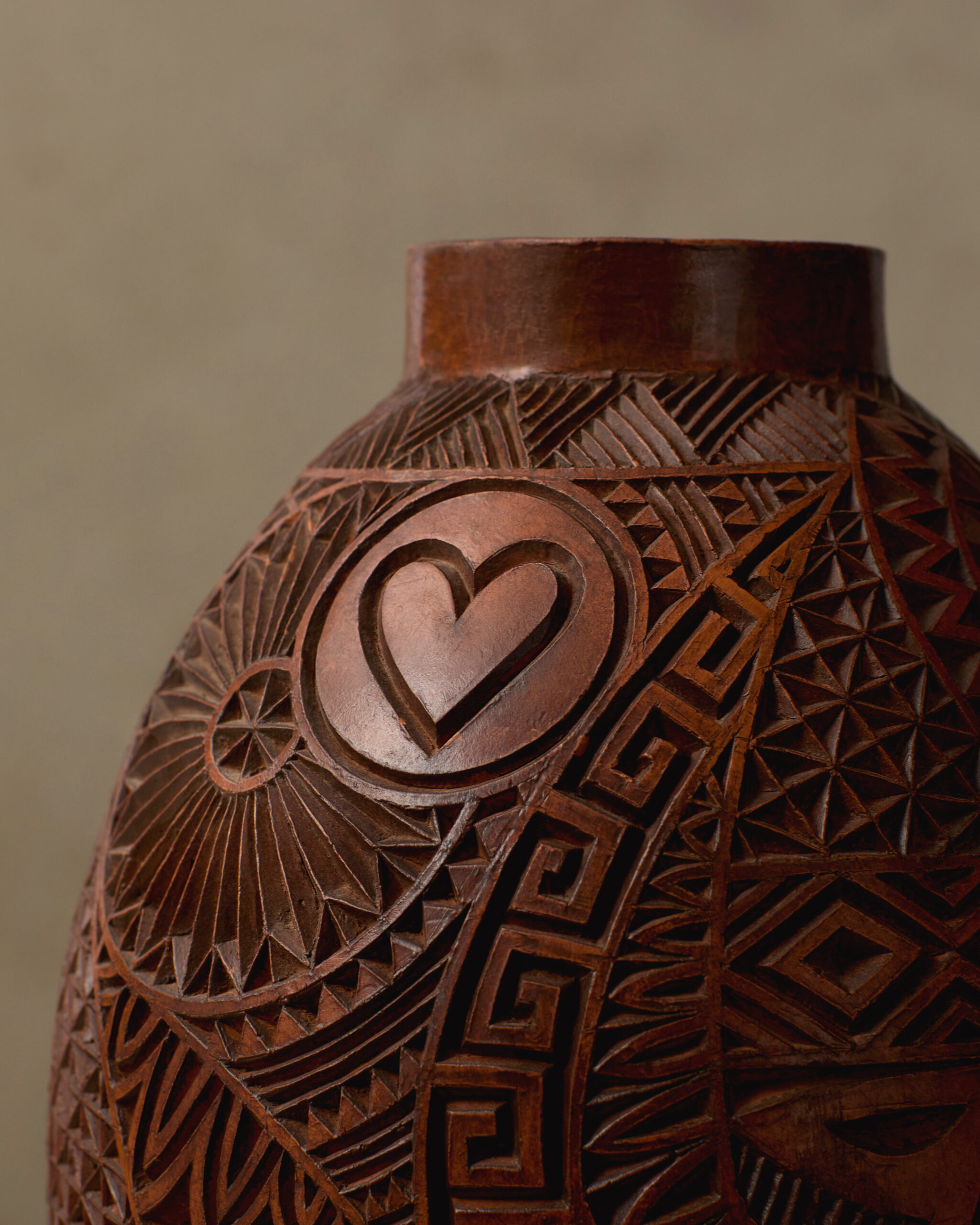
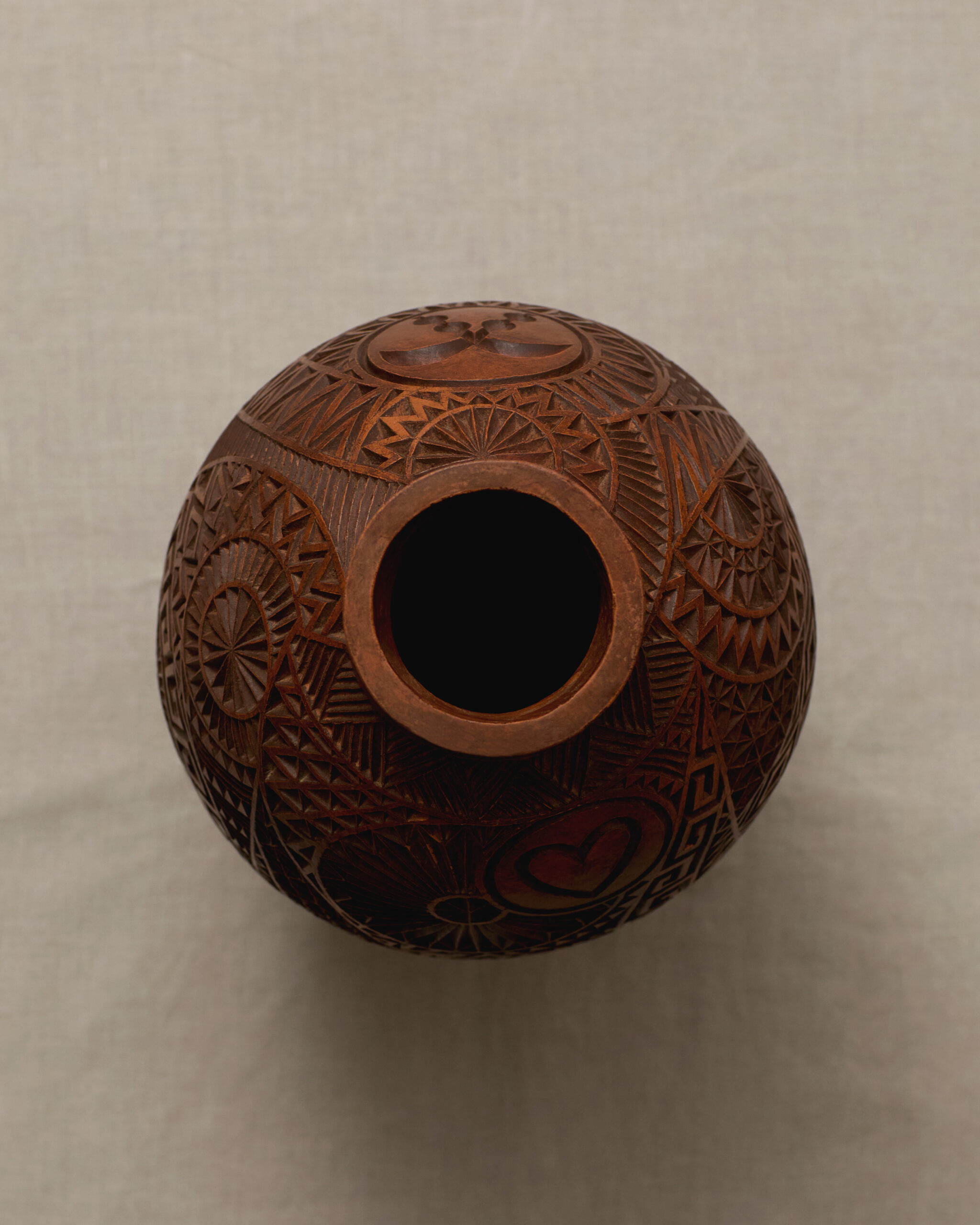
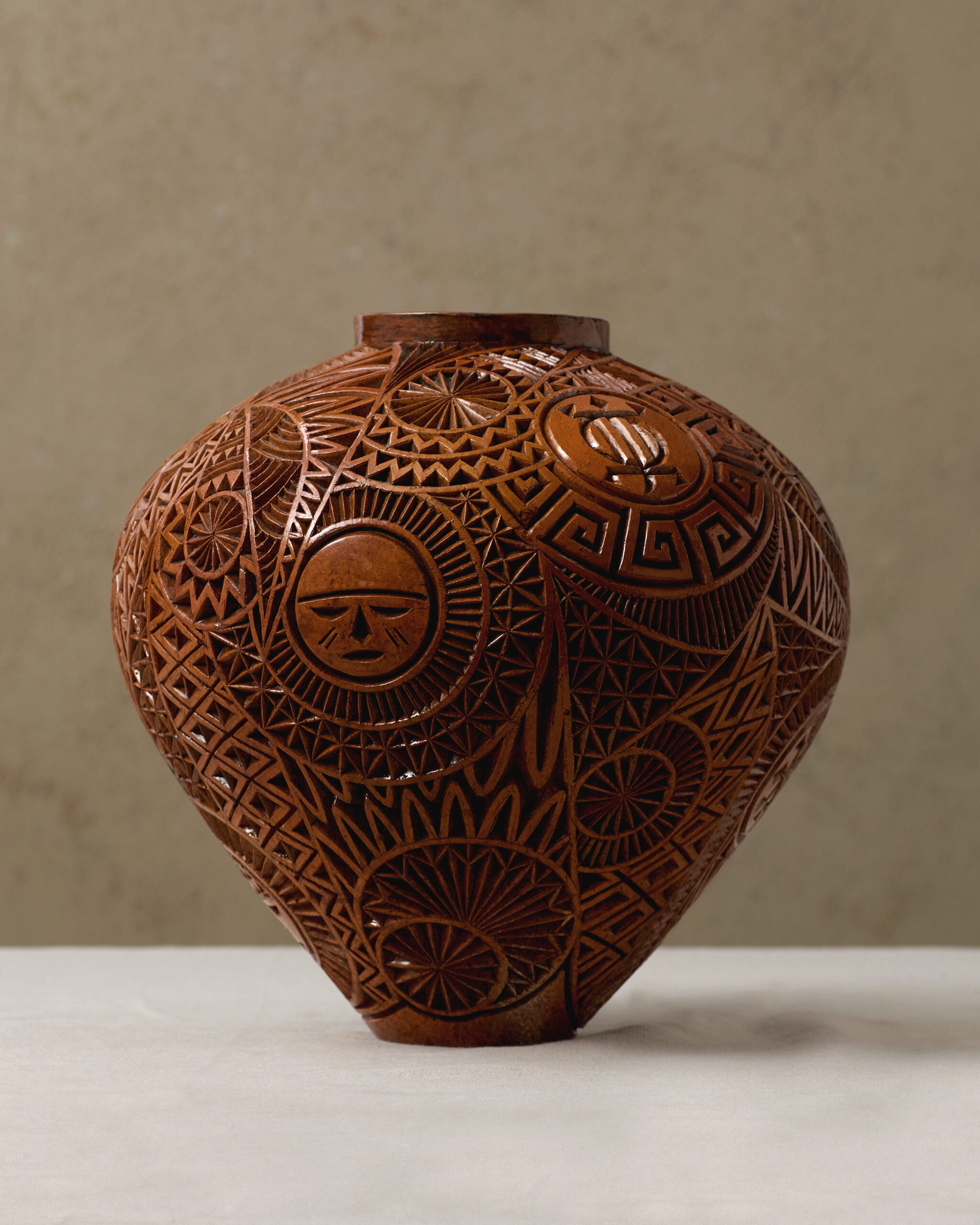
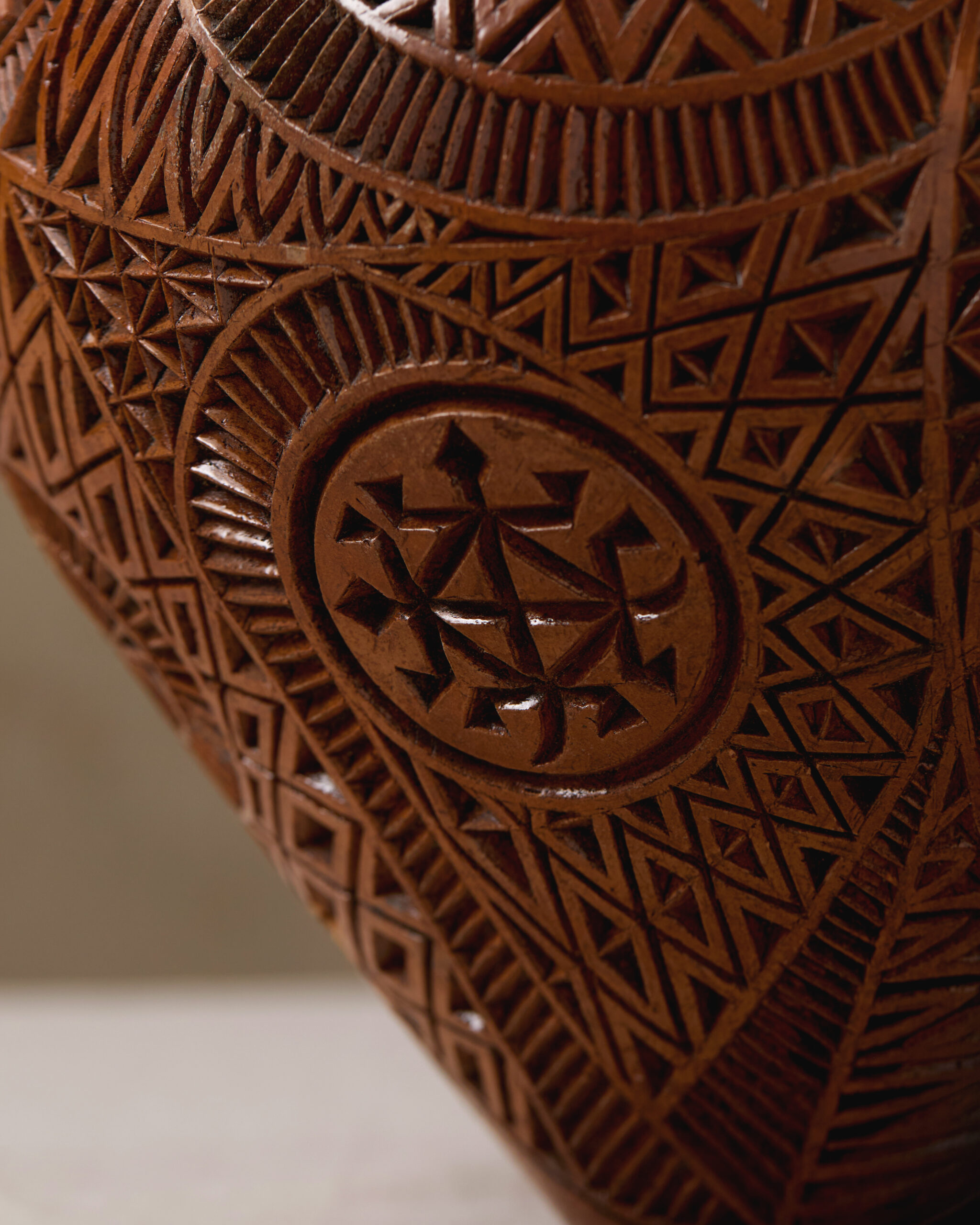
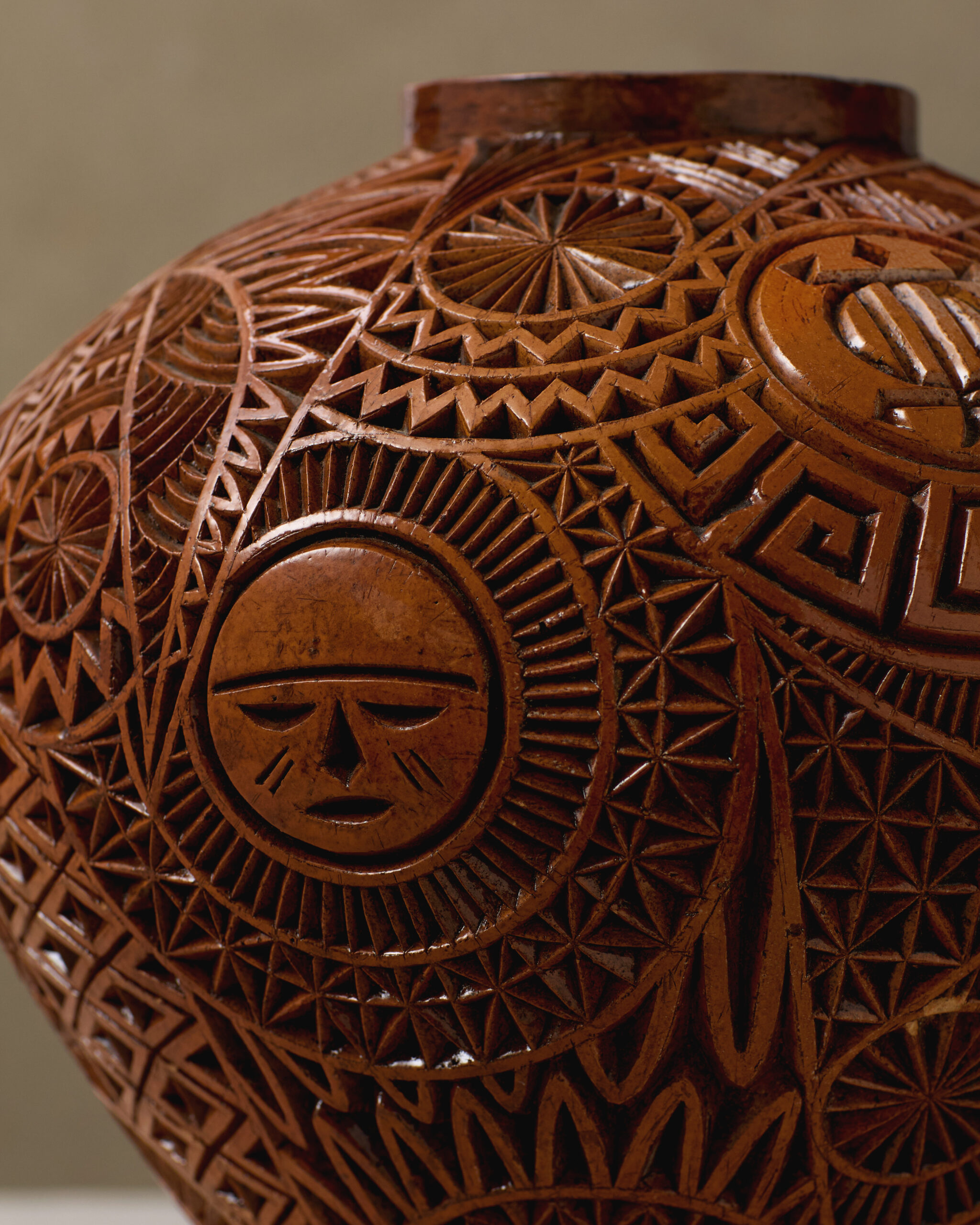
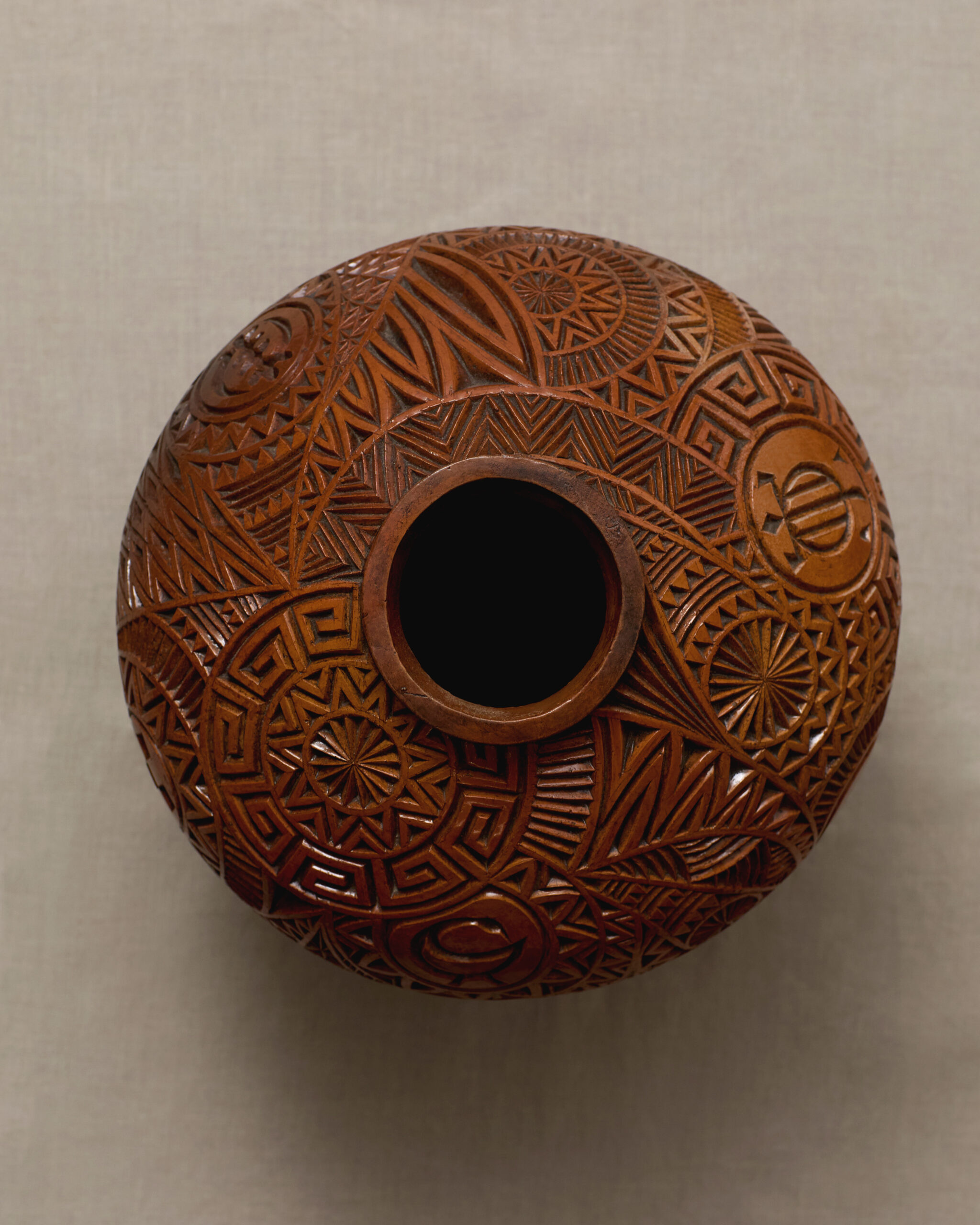
Adane builds his vessels by hand, working primarily through slab construction and coiling rather than the wheel. He raises the form first, then cuts into the surface in layered, repeated passes that produce dense relief across the body of the vessel. Many of his pieces hold the grain and patina of aged wood, and the resemblance is deliberate; the line between natural and made is something he keeps returning to.
Adane has described his current practice as a chapter in which the fire has done its work and transformation is underway, a reflection on both his materials and his own development as a maker.
Adane builds his vessels by hand, working primarily through slab construction and coiling rather than the wheel. He raises the form first, then cuts into the surface in layered, repeated passes that produce dense relief across the body of the vessel. Many of his pieces hold the grain and patina of aged wood, and the resemblance is deliberate; the line between natural and made is something he keeps returning to.
Adane has described his current practice as a chapter in which the fire has done its work and transformation is underway, a reflection on both his materials and his own development as a maker.


.svg)
.svg)

